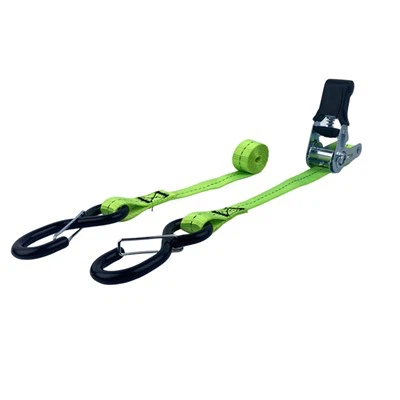
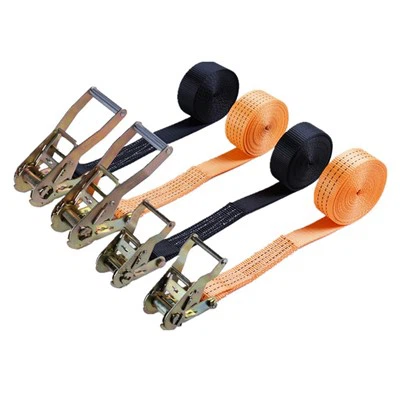
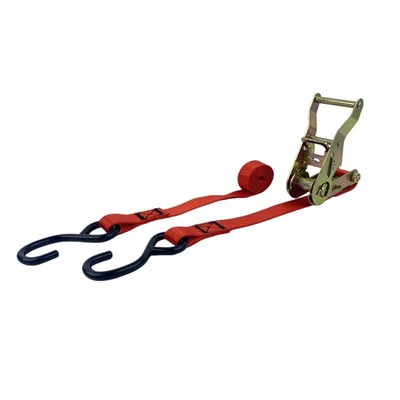
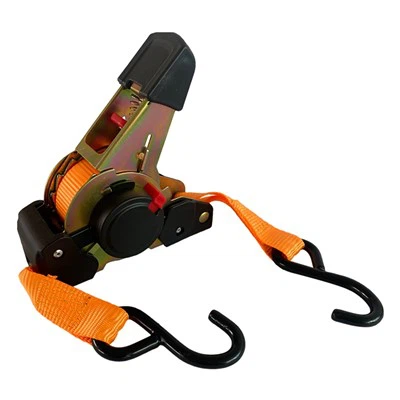
As a supplier of rope tie down straps, I often receive inquiries from customers asking how to determine if their straps are too old to use. This is a crucial question, as using worn - out or aged tie down straps can lead to serious safety hazards. In this blog, I'll share some key indicators to help you assess the condition of your rope tie down straps and decide whether it's time for a replacement.
Visual Inspection
The first and most straightforward way to check the status of your rope tie down straps is through a thorough visual inspection. Look for any signs of fraying, cuts, or abrasions on the surface of the strap. Over time, repeated use and friction against rough surfaces can cause the fibers of the strap to break down. Even small frays can compromise the strength of the strap significantly. For example, if you notice that the edges of the strap are starting to look fuzzy or that there are visible strands coming loose, this is a clear red flag.
Another aspect of visual inspection is to check for discoloration. A healthy rope tie down strap usually has a consistent color. If you see areas of the strap that are darker or lighter than the rest, it could be a sign of chemical damage. Exposure to sunlight, extreme temperatures, or certain chemicals can all cause the material to degrade and change its color. For instance, prolonged sun exposure can cause the strap to fade, which often indicates a weakening of the material's molecular structure.
Also, look at the stitching of the strap. High - quality rope tie down straps are usually well - stitched to ensure maximum strength. If you find that the stitches are coming loose, unraveling, or if there are any torn seams, the strap's integrity is at risk. Any compromise in the stitching can lead to a sudden failure of the strap under load.
Checking the Hardware
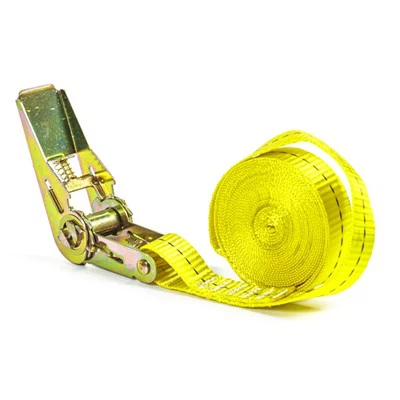
The hardware components of rope tie down straps, such as ratchets, hooks, and buckles, are just as important as the strap itself. Start by inspecting the ratchet mechanism. If it's difficult to operate, such as being hard to turn or doesn't lock properly, it might be damaged. A faulty ratchet can prevent you from tightening the strap securely, which is essential for keeping your load in place.
Examine the hooks and buckles for signs of rust, corrosion, or deformation. Rust can weaken the metal, making it more likely to break under stress. Deformed hooks or buckles may not grip the attachment points correctly, increasing the risk of the load coming loose. For example, if a hook has been bent out of shape, it won't have the same grip strength as when it was in its original condition. You can find heavy - duty and reliable Tie Down Hooks at Heavy Duty Tie Down Hooks.
Assessing the Strap's Elasticity
New rope tie down straps have a certain level of elasticity that allows them to stretch slightly under load and then return to their original shape. As the strap ages, this elasticity can change. If you notice that the strap is becoming overly stretchy or, conversely, has lost its ability to stretch at all, it may be a sign of wear.
An overly stretchy strap won't be able to hold the load firmly in place, as it will continue to give under pressure. On the other hand, a non - elastic strap can be brittle and more prone to breaking when suddenly stressed. To test the elasticity, simply stretch the strap gently and then release it. Watch how it responds. If it doesn't return to its original shape or if it feels very stiff during the stretching process, the strap might need to be replaced.
Load Capacity and Age
Every rope tie down strap has a specified load capacity, which is determined by its material, construction, and design. As the strap ages, its actual load - carrying capacity can decrease, even if it still looks relatively intact. Manufacturer guidelines often recommend replacing straps after a certain number of years, typically between 3 - 5 years, depending on the usage frequency and environmental conditions.
If you've been using a strap for a long time in harsh conditions, such as exposure to the elements, chemicals, or heavy - duty use, it's likely that its load - bearing capacity has diminished. Continuing to use an aged strap at its original rated load can lead to catastrophic failure. So, when in doubt about the strap's age - related degradation, it's better to err on the side of caution and replace it.
Usage History
Your usage history of the rope tie down strap can also provide valuable insights into its condition. If the strap has been used for particularly heavy loads frequently, it will wear out faster than one used for lighter tasks. Straps that have been involved in sudden shock loads, such as a rapid stop while towing a heavy load, can also suffer internal damage that may not be immediately visible.
Furthermore, if the strap has been stored improperly, for example, in a damp or hot environment, it can accelerate the degradation process. Moisture can cause mold and mildew growth, which not only weakens the strap but also poses health risks. Heat can cause the material to become brittle and lose its flexibility.
Replacement and Upgrade Options
If you've determined that your rope tie down strap is too old to use, it's time to consider replacement. As a supplier, I offer a wide range of high - quality rope tie down straps to meet different needs. For instance, our 1 Inch Heavy Duty Ratchet Straps are designed for heavy - duty applications and are built to last. They are made from durable materials and feature strong hardware components for reliable performance.


You can also find a variety of other ratchet straps and tie - downs at Ratchet Straps and Tie Downs. Upgrading to a better - quality strap can provide you with enhanced safety and reliability, and save you from potential headaches and hazards in the long run.
Conclusion
Knowing whether a rope tie down strap is too old to use is essential for ensuring the safety of your loads and the people around you. By conducting regular visual inspections, checking the hardware, assessing the strap's elasticity, considering its age and load capacity, and taking into account the usage history, you can make an informed decision about whether to replace the strap.
If you have any further questions about our rope tie down straps or need advice on selecting the right product for your needs, please don't hesitate to reach out. We're here to assist you with all your tie - down requirements and ensure that you get the best possible solution for your applications. Contact us to start discussing your procurement needs today.
References
- American National Standards Institute (ANSI). Standards for tie - down straps and related hardware.
- Manufacturer's guidelines for rope tie down straps maintenance and usage.