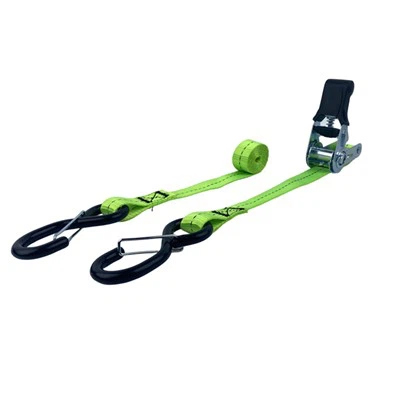
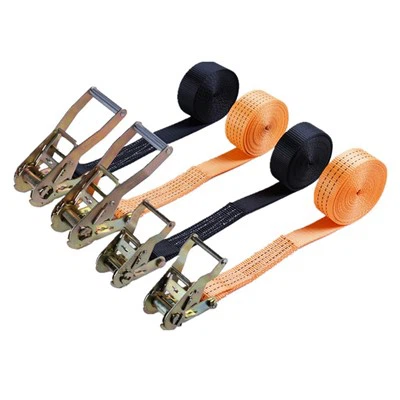
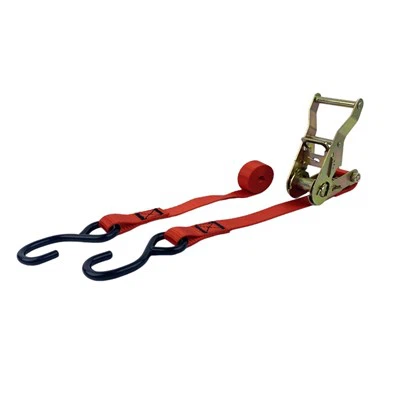
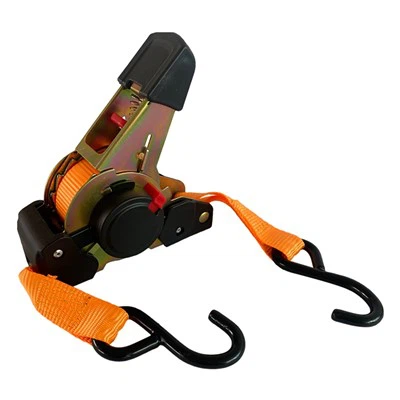
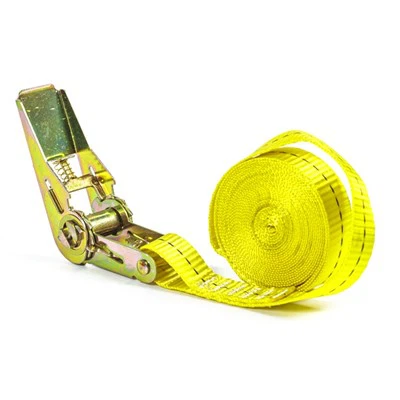
When it comes to securing cargo during transportation, load tie down straps are an indispensable tool. As a reliable supplier of load tie down straps, I understand the importance of choosing the right hook for these straps. The hook is the crucial component that connects the strap to the cargo and the vehicle, and its proper selection can significantly impact the safety and effectiveness of your cargo securing process. In this blog, I will share some key considerations to help you choose the right hook for your load tie down straps.
Understanding Different Types of Hooks
There are several types of hooks commonly used with load tie down straps, each designed for specific applications and cargo types.
S-Hooks
S-hooks are one of the most basic and widely used hooks in the industry. They are named for their distinctive S-shape, which allows them to easily attach to various anchor points. S-hooks are versatile and can be used in a variety of applications, such as securing light to medium-weight cargo on flatbeds, trailers, or trucks. They are also relatively inexpensive, making them a popular choice for many users. However, S-hooks may not be the best option for heavy or high-stress applications, as they can easily slip off the anchor point if not properly secured.
J-Hooks
J-hooks, as the name suggests, have a J-shaped design. They are similar to S-hooks but have a more pronounced curve at the end, which provides a better grip on the anchor point. J-hooks are commonly used for securing cargo on flatbeds, trailers, and trucks, especially when the anchor point is a pipe or a bar. They are also suitable for use with heavy or high-stress applications, as they are less likely to slip off the anchor point than S-hooks. However, J-hooks may not be suitable for use with all types of anchor points, as their shape may not fit properly.
Grab Hooks
Grab hooks are designed to provide a strong and secure grip on the anchor point. They have a serrated or toothed edge that bites into the anchor point, preventing the hook from slipping off. Grab hooks are commonly used for securing heavy or high-stress cargo on flatbeds, trailers, and trucks, especially when the anchor point is a rough or uneven surface. They are also suitable for use with cargo that is prone to shifting or moving during transportation. However, grab hooks may damage the anchor point if not used properly, so it is important to choose the right size and type of grab hook for your application.
Chain Hooks
Chain hooks are used in conjunction with chains to secure heavy or oversized cargo. They are designed to attach to the chain and provide a secure connection to the anchor point. Chain hooks are commonly used for securing cargo on flatbeds, trailers, and trucks, especially when the cargo is too heavy or large to be secured with straps alone. They are also suitable for use with cargo that is prone to shifting or moving during transportation. However, chain hooks can be heavy and cumbersome to use, so it is important to choose the right size and type of chain hook for your application.
Factors to Consider When Choosing a Hook
When choosing a hook for your load tie down straps, there are several factors to consider, including the type of cargo, the anchor point, the weight and size of the cargo, and the environment in which the cargo will be transported.
Type of Cargo
The type of cargo you are transporting will determine the type of hook you need. For example, if you are transporting light to medium-weight cargo, such as boxes or furniture, S-hooks or J-hooks may be sufficient. However, if you are transporting heavy or high-stress cargo, such as machinery or vehicles, grab hooks or chain hooks may be necessary.
Anchor Point
The anchor point is the location where the hook will be attached to the vehicle or the cargo. The type of anchor point will determine the type of hook you need. For example, if the anchor point is a pipe or a bar, J-hooks may be the best option. If the anchor point is a rough or uneven surface, grab hooks may be necessary. If the anchor point is a chain, chain hooks will be required.
Weight and Size of the Cargo
The weight and size of the cargo will also determine the type of hook you need. For example, if you are transporting heavy or oversized cargo, you will need a hook that is strong enough to support the weight of the cargo. You may also need a hook that is large enough to fit around the cargo or the anchor point.
Environment
The environment in which the cargo will be transported will also affect the type of hook you need. For example, if the cargo will be transported in a wet or corrosive environment, you will need a hook that is made of a corrosion-resistant material, such as stainless steel. If the cargo will be transported in a high-temperature environment, you will need a hook that can withstand the heat.
Importance of Using the Right Hook
Using the right hook for your load tie down straps is essential for ensuring the safety and effectiveness of your cargo securing process. A hook that is too small or too weak for the application can easily break or slip off the anchor point, causing the cargo to shift or fall during transportation. This can not only damage the cargo but also pose a serious safety hazard to other drivers on the road. On the other hand, a hook that is too large or too strong for the application can be overkill and may not provide a secure connection to the anchor point. This can also cause the cargo to shift or fall during transportation.
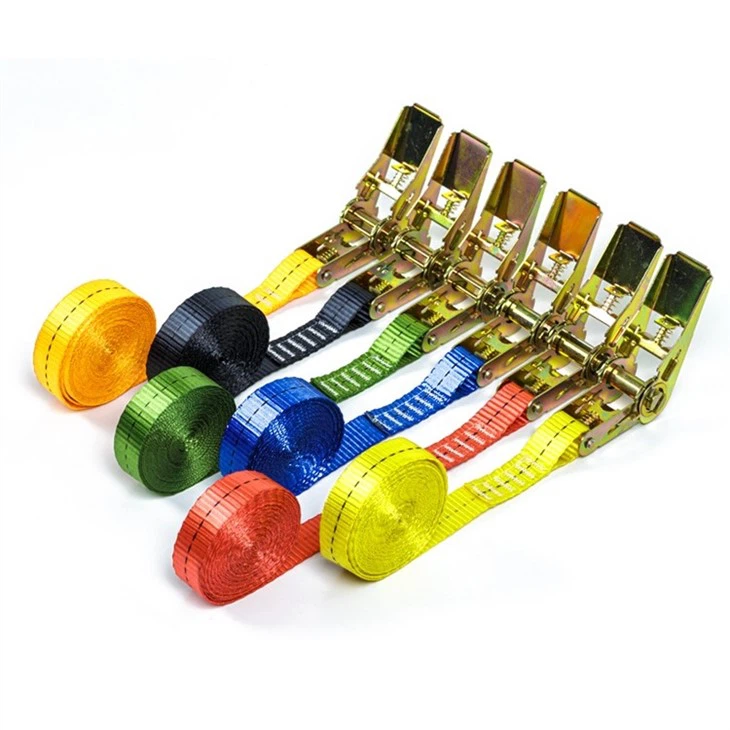

Our Product Offerings
As a supplier of load tie down straps, we offer a wide range of hooks to meet the needs of our customers. Our hooks are made of high-quality materials, such as steel and stainless steel, and are designed to provide a strong and secure connection to the anchor point. We offer S-hooks, J-hooks, grab hooks, chain hooks, and other types of hooks, in a variety of sizes and styles. Whether you are transporting light to medium-weight cargo or heavy or high-stress cargo, we have the right hook for your application.
If you are interested in learning more about our Lashing Straps with Hooks, Box Truck Cargo Straps, or Ratchet Rope Straps, please feel free to contact us. Our team of experts will be happy to help you choose the right hook for your load tie down straps and provide you with the information and support you need to ensure the safety and effectiveness of your cargo securing process.
Conclusion
Choosing the right hook for your load tie down straps is essential for ensuring the safety and effectiveness of your cargo securing process. By considering the type of cargo, the anchor point, the weight and size of the cargo, and the environment in which the cargo will be transported, you can choose the right hook for your application. At our company, we offer a wide range of hooks to meet the needs of our customers, and our team of experts is always available to help you choose the right hook for your load tie down straps. If you have any questions or need further information, please do not hesitate to contact us. We look forward to working with you to ensure the safe and secure transportation of your cargo.
References
- Cargo Securement Handbook, Federal Motor Carrier Safety Administration
- Load Securement Regulations, Department of Transportation
- Tie Down Straps and Hooks: A Guide to Choosing the Right Equipment, Cargo Control