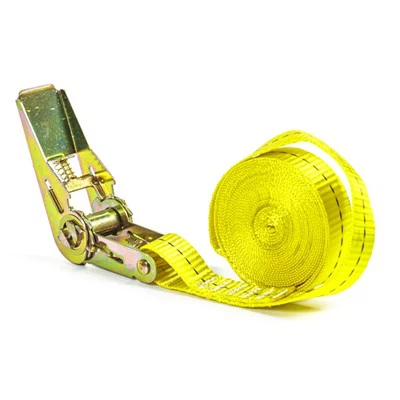
Hey there! As a supplier of marine ratchet straps, I often get asked how to measure the length of these straps you actually need. It might seem like a simple question, but there's more to it than you'd think. In this blog, I'll break it down step by step so you can make sure you're getting the right length for your marine needs.
Why Measuring the Right Length Matters
First off, why is it so important to measure the length correctly? Well, if your ratchet strap is too short, it won't be able to secure your cargo properly. You don't want your stuff shifting around on the water, right? On the other hand, if it's too long, it can be a hassle to work with. It might get tangled up, and it won't provide the tight and secure hold you need. So, getting the length just right is crucial for both safety and functionality.
Factors to Consider Before Measuring
Before you start grabbing a tape measure, there are a few things you need to take into account.
The Size and Shape of Your Cargo
The first thing is the size and shape of what you're tying down. If you're securing a small, compact item, you won't need as long a strap as you would for a large, bulky piece of equipment. For example, if you're tying down a small fishing cooler, a shorter strap will do the job. But if you're securing a big outboard motor, you'll need a longer one to wrap around it and attach to the boat properly.
Attachment Points
Next, think about where you'll be attaching the strap. On a boat, there are usually specific cleats, hooks, or other attachment points. You need to measure the distance between the points where you'll attach the ends of the strap. This will give you a starting point for determining the length. Sometimes, these attachment points might be close together, and other times, they could be far apart, depending on the layout of your boat and the location of your cargo.
Slack and Tension
You also need to consider how much slack you'll need and how tight you want to make the strap. You don't want it so tight that it damages your cargo, but you also don't want it so loose that it doesn't hold anything in place. A good rule of thumb is to leave a little bit of slack for adjustments and to account for any movement on the water. When you're measuring, think about how much extra length you'll need to achieve the right tension.
Measuring the Length
Now that you've considered all the factors, it's time to actually measure the length.
Step 1: Identify the Attachment Points
First, find the two attachment points on your boat where you'll be securing the ends of the ratchet strap. These could be cleats, hooks, or other fixtures. Make sure they're strong enough to hold the weight of your cargo.
Step 2: Measure the Distance
Use a tape measure to measure the straight-line distance between the two attachment points. This is the base length you'll start with. Write this measurement down so you don't forget it.
Step 3: Account for Wrapping Around the Cargo
If you need to wrap the strap around your cargo, you'll need to add extra length for that. Measure the circumference of the part of the cargo where the strap will go. If it's a rectangular object, measure around the sides where the strap will be placed. Add this measurement to the distance between the attachment points.
Step 4: Add Extra for Slack and Tension
As I mentioned earlier, you need to add some extra length for slack and to achieve the right tension. A good amount to add is usually around 10 - 20% of the total length you've calculated so far. This will give you enough room to adjust the strap and make sure it's secure.
Let's say you measured the distance between the attachment points as 5 feet, and the circumference of the cargo where the strap will wrap is 3 feet. The total length before adding extra for slack is 5 + 3 = 8 feet. If you add 15% for slack, you'll need to add 8 * 0.15 = 1.2 feet. So, the final length you'll need is 8 + 1.2 = 9.2 feet.
Different Types of Marine Ratchet Straps and Their Length Requirements
There are different types of marine ratchet straps, and each might have slightly different length requirements.
Fixed-Length Straps
Fixed-length straps come in pre-determined lengths. You'll need to choose a length that's closest to the measurement you calculated. If your calculated length is 9.2 feet, you might choose a 10-foot fixed-length strap. Just make sure it's not too long that it becomes a nuisance to work with.
Adjustable Straps
Adjustable straps are great because you can change the length as needed. With these, you can start with a longer strap and then adjust it to the right length for your cargo and attachment points. They offer more flexibility, especially if you have different-sized items to tie down on different occasions.
Our Product Range
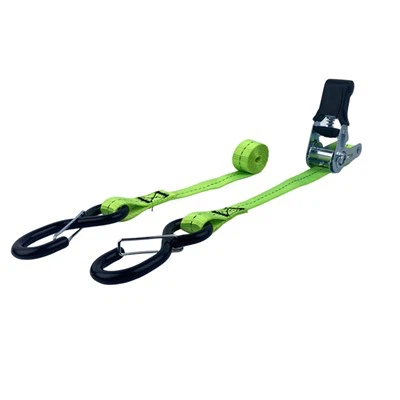
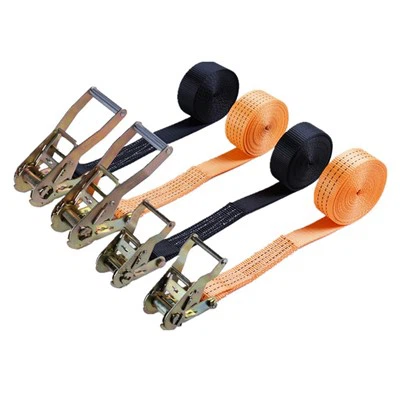
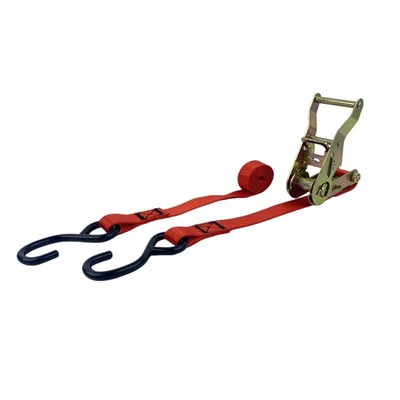
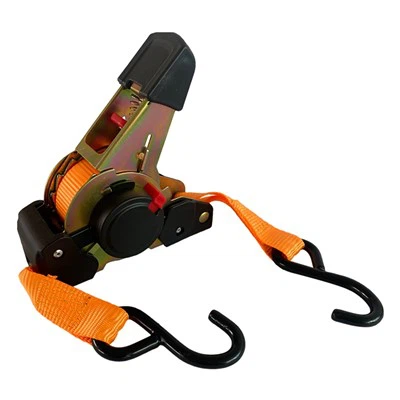
As a supplier of marine ratchet straps, we offer a wide range of options to meet your needs. We have Automotive Tie Down Straps that can also be used in marine applications. These are strong and durable, designed to hold heavy loads securely. Our High Quality Ratchet Strap is made from top-notch materials, ensuring it can withstand the harsh marine environment. And if you're looking for something more convenient, our Retractable Cargo Straps are a great choice. They're easy to use and store, and you can adjust the length with ease.
Conclusion
Measuring the length of marine ratchet straps might seem complicated at first, but if you follow these steps and consider all the factors, you'll be able to get it right. Remember, getting the right length is essential for the safety and security of your cargo on the water.


If you're in the market for marine ratchet straps or have any questions about measuring the length, don't hesitate to reach out. We're here to help you find the perfect solution for your needs. Whether you're a professional sailor or just a weekend boater, we have the products to keep your cargo secure.
References
- Marine Cargo Securement Guidelines, Maritime Industry Publications
- Handbook of Strapping and Tying Techniques, Industrial Packaging Association