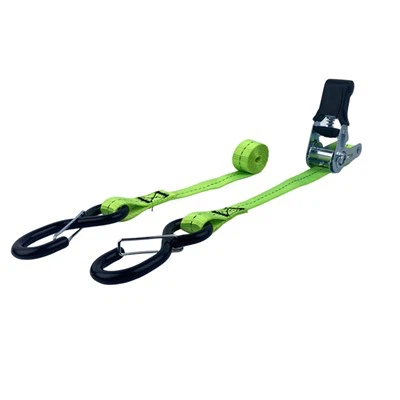
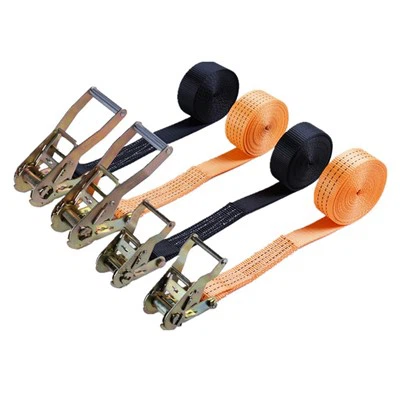
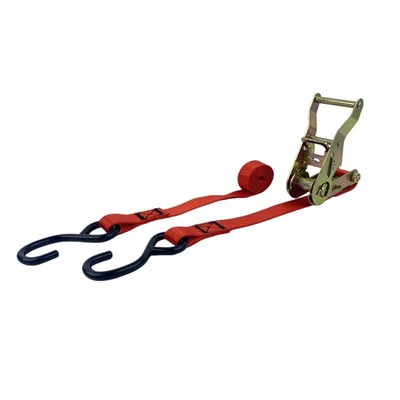
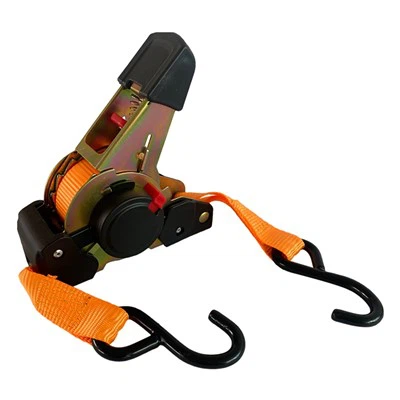
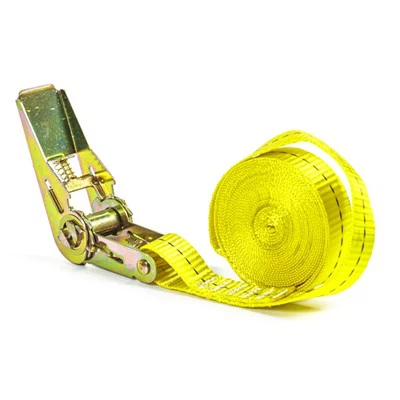
Selecting the right high-quality ratchet straps for your needs can be a game-changer, whether you're a professional hauler or just looking to secure your gear for a weekend trip. As a supplier of high-quality ratchet straps, I've seen firsthand the importance of making the right choice. In this blog, I'll share some tips on how to pick the perfect ratchet straps for your specific requirements.
Understand Your Application
The first step in selecting the right ratchet straps is to understand what you'll be using them for. Different applications require different types of straps. For example, if you're securing a UTV (Utility Task Vehicle), you'll need straps that are specifically designed for that purpose. Check out Best Utv Tie Down Straps for options tailored to UTVs. These straps are usually shorter and more flexible to fit around the unique contours of a UTV.
On the other hand, if you're hauling large items on a truck, you'll want Truck Ratchet Tie Down Straps. These straps are typically longer and have a higher weight capacity to handle the heavy loads that trucks often carry. They're also built to withstand the vibrations and movements that occur during transportation.
For those who need to secure items on boats or other marine vessels, Marine Ratchet Straps are the way to go. These straps are made from materials that are resistant to water, salt, and other corrosive elements found in marine environments.
Consider the Weight Capacity
Once you've determined your application, the next thing to consider is the weight capacity of the ratchet straps. The weight capacity, also known as the Working Load Limit (WLL), indicates the maximum amount of weight that the strap can safely hold. It's crucial to choose straps with a WLL that exceeds the weight of the items you'll be securing.


To calculate the total weight you need to secure, add up the weight of all the items and any additional forces that might act on the load during transportation, such as acceleration, deceleration, and wind resistance. As a general rule, it's a good idea to choose straps with a WLL that is at least 1.5 to 2 times the weight of the load. This provides a safety margin and ensures that the straps can handle unexpected forces.
Evaluate the Strap Material
The material of the ratchet strap plays a significant role in its durability and performance. There are several common materials used in ratchet straps, each with its own advantages and disadvantages.
- Nylon: Nylon is a popular choice for ratchet straps because it's strong, flexible, and resistant to abrasion. It also has some stretch, which can help absorb shock and prevent the load from shifting during transportation. However, nylon can be damaged by prolonged exposure to sunlight and chemicals.
- Polyester: Polyester is another common material for ratchet straps. It's similar to nylon in terms of strength and abrasion resistance, but it has less stretch. Polyester is also more resistant to UV rays and chemicals, making it a good choice for outdoor applications.
- Polypropylene: Polypropylene is a lightweight and inexpensive material that is often used in less demanding applications. It's not as strong as nylon or polyester, but it's resistant to water and chemicals. However, polypropylene can be damaged by heat and sunlight, so it's not suitable for long-term outdoor use.
Check the Ratchet Mechanism
The ratchet mechanism is the part of the ratchet strap that allows you to tighten and loosen the strap. A high-quality ratchet mechanism should be easy to operate, have a smooth action, and be able to hold the strap securely in place.
When evaluating the ratchet mechanism, look for the following features:
- Durable construction: The ratchet should be made from high-quality materials, such as steel or aluminum, to ensure its strength and durability.
- Smooth operation: The ratchet should turn easily and without any binding or sticking. You should be able to tighten and loosen the strap with minimal effort.
- Positive locking: The ratchet should have a positive locking mechanism that prevents the strap from loosening during transportation. This can be a pawl and ratchet system or a cam lock mechanism.
Look at the End Fittings
The end fittings of the ratchet strap are the parts that connect the strap to the load and the anchor point. There are several different types of end fittings available, each designed for specific applications.
- J-hooks: J-hooks are a common type of end fitting that are easy to use and can be attached to a variety of anchor points. They're suitable for most applications, but they may not be the best choice for heavy loads or when the load needs to be secured tightly.
- S-hooks: S-hooks are similar to J-hooks, but they have a more rounded shape. They're also easy to use and can be attached to a variety of anchor points. S-hooks are a good choice for lighter loads or when the load needs to be secured quickly.
- Snap hooks: Snap hooks are a convenient type of end fitting that can be quickly attached and detached from the anchor point. They're often used in applications where the load needs to be frequently adjusted or removed.
- Flat hooks: Flat hooks are designed to be used with flat surfaces, such as trailers or truck beds. They provide a more secure connection than J-hooks or S-hooks and are suitable for heavy loads.
Consider the Length of the Strap
The length of the ratchet strap is another important factor to consider. You'll need to choose a strap that is long enough to reach around the load and the anchor point, but not so long that it becomes cumbersome to use.
To determine the appropriate length of the strap, measure the distance around the load and the anchor point. Add a few extra inches to this measurement to allow for some slack and to make it easier to tighten the strap.
Look for Additional Features
In addition to the basic features mentioned above, some ratchet straps may have additional features that can enhance their performance and convenience.
- Reflective stitching: Reflective stitching can make the ratchet strap more visible at night, which can be a safety advantage when working in low-light conditions.
- Padded handles: Padded handles can make it more comfortable to operate the ratchet mechanism, especially when you need to tighten or loosen the strap multiple times.
- Adjustable length: Some ratchet straps have an adjustable length feature that allows you to customize the length of the strap to fit your specific needs. This can be useful if you need to secure different sizes of loads with the same strap.
Conclusion
Selecting the right high-quality ratchet straps for your needs requires careful consideration of several factors, including your application, weight capacity, strap material, ratchet mechanism, end fittings, length, and additional features. By taking the time to evaluate these factors and choose the right straps, you can ensure that your load is secured safely and effectively during transportation.
If you're still unsure which ratchet straps are right for you, don't hesitate to contact us. As a supplier of high-quality ratchet straps, we have the expertise and experience to help you find the perfect solution for your needs. We offer a wide range of ratchet straps in different sizes, materials, and configurations, so you're sure to find the right ones for your application. Let's start a conversation and get you the best ratchet straps for your requirements.
References
- "Ratchet Straps: A Comprehensive Guide." Load Securement Experts.
- "Choosing the Right Ratchet Straps for Your Application." Transportation Safety Journal.