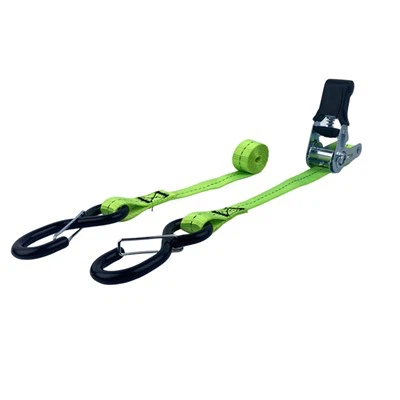
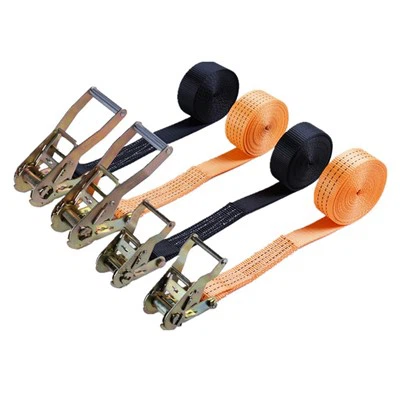
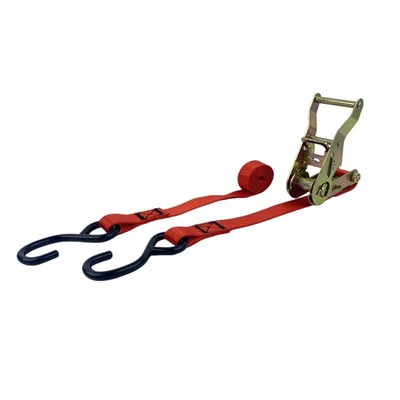
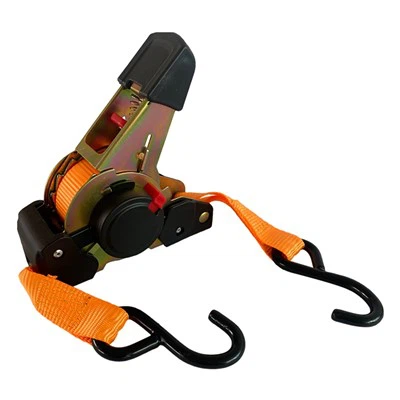
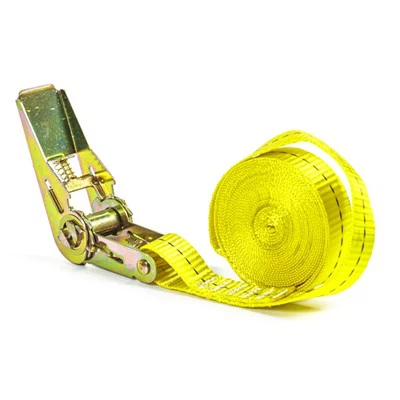
Hey there! As a supplier of Marine Ratchet Straps, I often get asked about the shear strength of these straps. So, I thought I'd take some time to break it down for you in this blog post.
First off, let's talk about what shear strength actually means. Shear strength is the ability of a material to resist forces that cause one part of the material to slide past another part in a direction parallel to their plane of contact. In the context of marine ratchet straps, shear strength is crucial because these straps are often used to secure heavy loads on boats, ships, or other marine vessels. They need to be able to withstand the forces that can be exerted on them during rough seas, strong winds, or sudden movements of the vessel.
The shear strength of marine ratchet straps depends on several factors. One of the most important factors is the material used to make the straps. Most marine ratchet straps are made from high - strength polyester webbing. Polyester is a great choice because it has excellent resistance to abrasion, UV rays, and moisture. It also has a relatively high tensile strength, which is related to shear strength. The better the quality of the polyester, the higher the shear strength of the strap is likely to be.


Another factor that affects shear strength is the construction of the strap. The way the webbing is woven and how the ratchet mechanism is attached can have a big impact. A well - constructed strap will have a tight, uniform weave that distributes the load evenly across the width of the strap. The ratchet mechanism should be securely attached to the webbing, with no weak points where the shear forces could cause the strap to fail.
The width of the strap also plays a role in shear strength. Generally, wider straps have a higher shear strength than narrower ones. This is because a wider strap has more surface area to distribute the load, reducing the stress on any one point. For example, a 4 - inch wide marine ratchet strap will typically have a higher shear strength than a 2 - inch wide strap.
Now, let's get into some numbers. The shear strength of marine ratchet straps can vary widely depending on the factors I mentioned above. On average, a good quality 2 - inch wide polyester marine ratchet strap might have a shear strength of around 3,000 to 5,000 pounds. A 4 - inch wide strap could have a shear strength of 6,000 to 10,000 pounds or more. However, these are just rough estimates, and the actual shear strength of a specific strap should be provided by the manufacturer.
It's important to note that the shear strength of a strap is not the only thing you need to consider when choosing a marine ratchet strap. You also need to think about the working load limit (WLL). The WLL is the maximum load that a strap should be used to secure under normal conditions. It's usually a fraction of the strap's breaking strength (which is related to shear strength). For example, a strap with a breaking strength of 10,000 pounds might have a WLL of 2,000 pounds. This safety margin is important to ensure that the strap doesn't fail under unexpected circumstances.
If you're in the market for marine ratchet straps, you might also be interested in other types of ratchet tie - down straps. We offer a variety of options, including Tow Truck Tie Down Straps, 5 Ton Straps, and Load Binder Straps. These straps are designed for different applications, but they all share the same high - quality construction and reliable performance.
When using marine ratchet straps, it's crucial to follow the proper safety procedures. Make sure the strap is properly secured to the load and the anchor point. Check the strap regularly for signs of wear and tear, such as fraying or cuts in the webbing. If you notice any damage, replace the strap immediately.
In conclusion, the shear strength of marine ratchet straps is an important factor to consider when choosing the right strap for your marine application. By understanding the factors that affect shear strength, such as the material, construction, and width of the strap, you can make an informed decision. And remember, safety should always be your top priority when using any type of ratchet strap.
If you're interested in learning more about our marine ratchet straps or are looking to make a purchase, don't hesitate to reach out. We're here to help you find the perfect straps for your needs and ensure that you have a safe and reliable solution for securing your loads on the water.
References:
- "Handbook of Rigging and Lifting Equipment"
- Industry standards and guidelines for ratchet tie - down straps