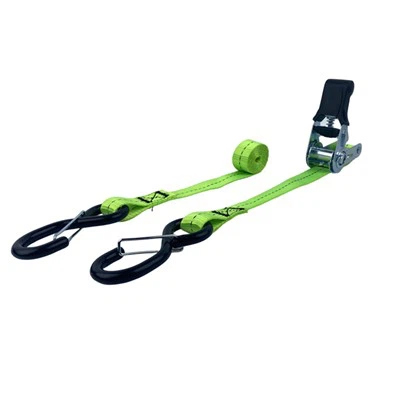
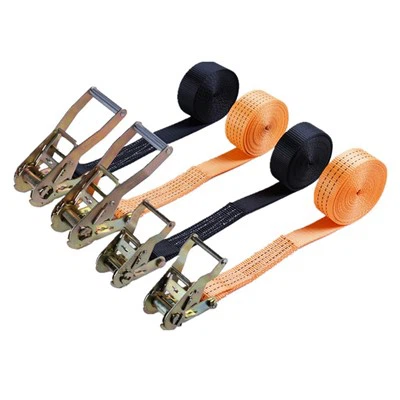
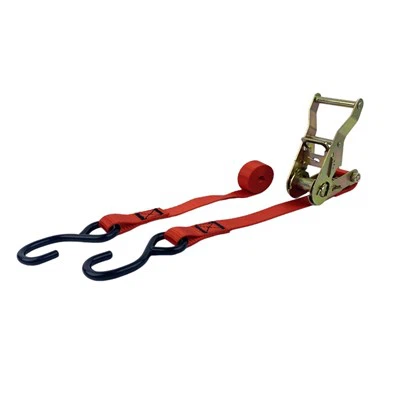
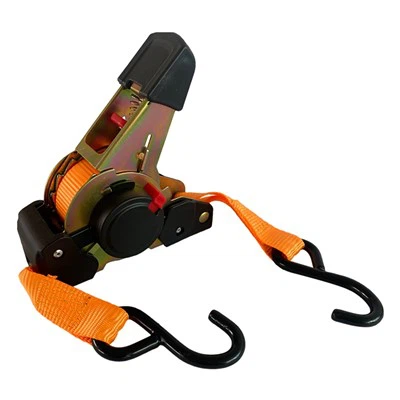
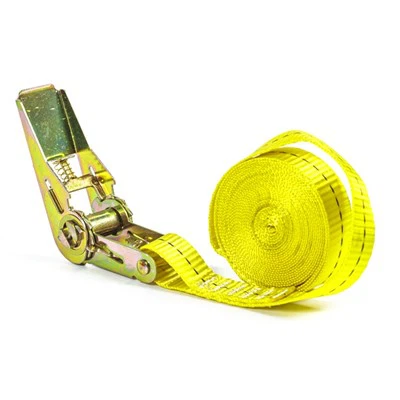
The thickness of the webbing on 1000 Lb Ratchet Straps is a crucial factor that impacts the strap's strength, durability, and overall performance. As a supplier of 1000 Lb Ratchet Straps, I have in - depth knowledge about this topic and would like to share it with you.
Understanding the Basics of Ratchet Straps
Ratchet straps are widely used for securing loads during transportation. They consist of a ratchet mechanism and a webbing. The ratchet is used to tighten the strap, while the webbing is the part that comes into direct contact with the load. A 1000 Lb Ratchet Strap is designed to handle a working load limit (WLL) of 1000 pounds, which means it can safely secure loads up to this weight under normal conditions.
Factors Affecting Webbing Thickness
Material
The material of the webbing plays a significant role in determining its thickness. Common materials for ratchet strap webbing include polyester, nylon, and polypropylene. Polyester is a popular choice for 1000 Lb Ratchet Straps because of its high strength, low stretch, and resistance to UV rays and chemicals. Polyester webbing typically has a relatively consistent thickness that is optimized for its strength - to - weight ratio. Nylon, on the other hand, is known for its high elasticity and shock - absorbing properties. Nylon webbing might be slightly thicker in some cases to accommodate its stretch characteristics while still maintaining the required strength. Polypropylene is a lighter and less expensive option, but it is not as strong as polyester or nylon. Its webbing thickness may vary depending on the manufacturer's attempt to balance cost and performance.
Load Requirements
The 1000 Lb working load limit of the ratchet strap directly influences the webbing thickness. To safely handle a 1000 - pound load, the webbing must have sufficient cross - sectional area to distribute the load evenly and prevent breakage. Thicker webbing generally has a higher load - bearing capacity. However, manufacturers also need to consider the practicality of the strap. If the webbing is too thick, the strap may become heavy and difficult to handle, which is not ideal for everyday use.
Manufacturing Process
The manufacturing process can also affect the webbing thickness. High - quality manufacturing processes can produce webbing with a more uniform thickness. For example, some advanced weaving techniques can create webbing with consistent thread density and thickness throughout the length of the strap. In contrast, cheaper manufacturing methods may result in webbing with uneven thickness, which can lead to weak points in the strap and reduce its overall reliability.
Typical Thickness Range of 1000 Lb Ratchet Strap Webbing
In general, the thickness of the webbing on 1000 Lb Ratchet Straps ranges from approximately 0.1 inches (2.54 mm) to 0.2 inches (5.08 mm). This range is a result of the balance between the factors mentioned above. A thinner webbing within this range may be used when the manufacturer wants to keep the strap lightweight and flexible, while a thicker webbing is chosen when maximum strength and durability are required.


Importance of Proper Webbing Thickness
Safety
Safety is the most important aspect when it comes to using ratchet straps. If the webbing is too thin for the 1000 - pound load, there is a high risk of the strap breaking during transportation, which can lead to the load shifting or falling off the vehicle. This not only endangers the driver and other road users but also causes damage to the load. On the other hand, using a strap with an overly thick webbing may not necessarily provide additional safety benefits and can add unnecessary weight and cost.
Durability
Proper webbing thickness also contributes to the strap's durability. A well - designed webbing thickness can withstand the wear and tear of repeated use, friction against the load and the ratchet mechanism, and exposure to the elements. For example, a 1000 Lb Ratchet Strap with a suitable webbing thickness will be less likely to fray or develop holes over time, ensuring a longer service life.
Ease of Use
The thickness of the webbing affects how easy the strap is to handle. A strap with a reasonable webbing thickness is easier to thread through the ratchet and wrap around the load. If the webbing is too thick, it may be difficult to manipulate, especially in tight spaces. Conversely, if it is too thin, it may be prone to getting caught or tangled in the ratchet mechanism.
Our Product Offerings
As a supplier of 1000 Lb Ratchet Straps, we offer a wide range of products with different webbing thicknesses to meet the diverse needs of our customers. Our Rope Tie Down Straps are made of high - quality polyester webbing with a carefully selected thickness to ensure both strength and flexibility. These straps are suitable for a variety of applications, such as securing small to medium - sized loads on trucks, trailers, or boats.
We also provide 5000kg Ratchet Straps. Although these are higher - rated straps, our manufacturing expertise allows us to optimize the webbing thickness for different load requirements. For customers who need to secure utility vehicles (UTVs), our Tie Down Straps For Utv are designed with the right webbing thickness to provide a secure and reliable hold.
Conclusion
The thickness of the webbing on 1000 Lb Ratchet Straps is a multi - faceted aspect that is influenced by material, load requirements, and manufacturing processes. A proper webbing thickness is essential for safety, durability, and ease of use. As a professional supplier, we are committed to providing high - quality ratchet straps with the right webbing thickness for your specific needs.
If you are interested in purchasing 1000 Lb Ratchet Straps or have any questions about our products, please feel free to contact us for further discussion and negotiation. We look forward to serving you and helping you find the perfect ratchet straps for your applications.
References
- "Ratchet Straps: A Comprehensive Guide", published by a leading industry magazine.
- Technical specifications from major ratchet strap manufacturers.