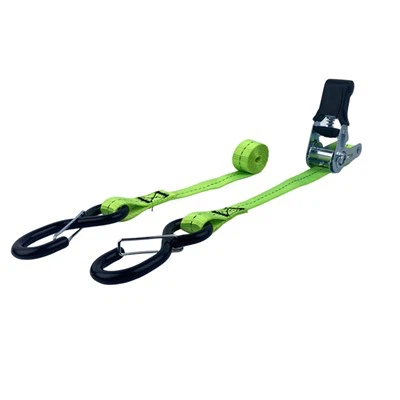
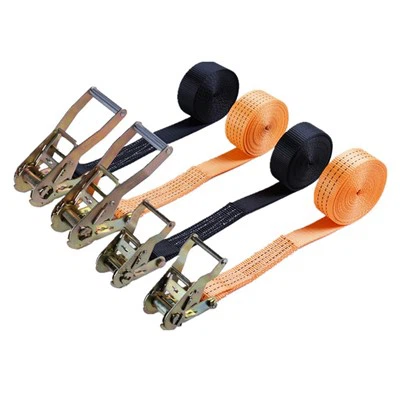
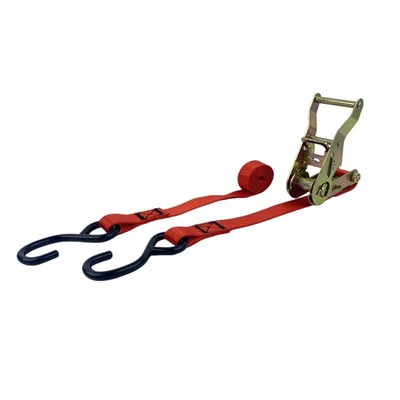
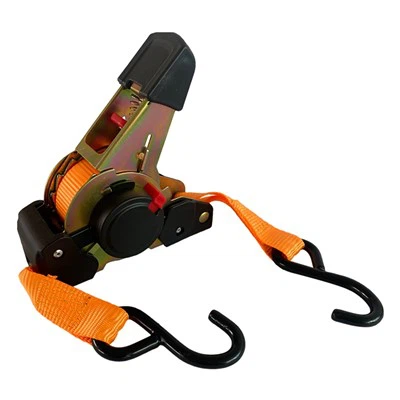
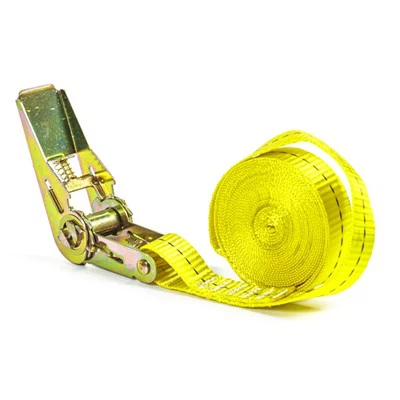
Are marine ratchet straps resistant to abrasion? This is a question that many customers in the marine and transportation industries often ask. As a supplier of marine ratchet straps, I am more than happy to delve into this topic and provide you with in - depth information.


Understanding Marine Ratchet Straps
Marine ratchet straps are essential tools used in various marine applications, such as securing cargo on boats, tying down equipment during transportation, and ensuring the stability of items on docks. These straps are designed to withstand the harsh marine environment, which includes exposure to saltwater, UV rays, and strong winds.
The ratchet mechanism in these straps allows for easy tightening and loosening, providing a reliable way to secure loads. The webbing of the strap is the part that comes into direct contact with the cargo and other surfaces, and its resistance to abrasion is crucial for the overall performance and longevity of the strap.
Factors Affecting Abrasion Resistance
Material of the Webbing
The material used to make the webbing of marine ratchet straps plays a significant role in its abrasion resistance. Most high - quality marine ratchet straps are made from polyester webbing. Polyester is known for its excellent abrasion resistance. It has a smooth surface that can slide over rough edges without getting easily frayed. Compared to other materials like nylon, polyester is less likely to absorb water, which can further reduce its strength and increase the risk of abrasion when wet.
Webbing Thickness and Density
The thickness and density of the webbing also impact its abrasion resistance. Thicker and denser webbing generally offers better protection against abrasion. A thicker webbing can withstand more friction and rubbing before it starts to show signs of wear. Some of our 1 Inch Heavy Duty Ratchet Straps feature a thick and dense polyester webbing, which is specifically designed to resist abrasion in tough marine environments.
Coating and Treatments
Many marine ratchet straps come with special coatings or treatments to enhance their abrasion resistance. For example, some straps are treated with a polyurethane coating. This coating not only provides an extra layer of protection against abrasion but also helps to repel water and resist UV damage. The coating fills in the pores of the webbing, making it smoother and less likely to catch on rough surfaces.
Testing Abrasion Resistance
To ensure the quality of our marine ratchet straps, we conduct various tests to measure their abrasion resistance. One common test is the Taber Abrasion Test. In this test, a sample of the webbing is rubbed against an abrasive wheel under a specific load for a set number of cycles. After the test, the amount of material loss is measured. Our straps consistently perform well in these tests, indicating their high level of abrasion resistance.
Another way to test abrasion resistance is through real - world simulations. We take our straps and use them in actual marine applications, such as securing heavy equipment on boats during long - distance voyages. By monitoring the condition of the straps over time, we can accurately assess how well they resist abrasion in real - life scenarios.
Applications and the Need for Abrasion Resistance
Securing Cargo on Boats
When securing cargo on boats, marine ratchet straps are often in contact with rough surfaces such as the boat's deck, metal fittings, and the edges of the cargo itself. If the straps are not abrasion - resistant, they can quickly wear out, leading to a loss of tension and potentially causing the cargo to shift. This can be extremely dangerous, especially in rough seas. Our 5 Ton Straps are designed to handle heavy loads and are highly resistant to abrasion, making them ideal for securing large and heavy cargo on boats.
Tying Down Equipment on Trailers
In addition to boat applications, marine ratchet straps are also used for tying down equipment on trailers. Trailers can have uneven surfaces and sharp edges, and the straps need to be able to withstand the friction and rubbing that occurs during transportation. For example, when using Tie Down Straps For Utv to secure a UTV on a trailer, the straps may rub against the UTV's frame and the trailer's rails. Abrasion - resistant straps ensure that the equipment remains securely fastened throughout the journey.
Maintaining Abrasion - Resistant Straps
Even though our marine ratchet straps are highly resistant to abrasion, proper maintenance is still essential to prolong their lifespan. After each use, it is recommended to clean the straps with fresh water to remove any salt, dirt, or debris. Inspect the straps regularly for any signs of wear, such as fraying or thinning of the webbing. If any damage is detected, replace the strap immediately to ensure safety.
Conclusion
In conclusion, marine ratchet straps can be highly resistant to abrasion, especially when they are made from high - quality materials like polyester, have appropriate thickness and density, and are treated with special coatings. At our company, we are committed to providing our customers with the best - in - class marine ratchet straps that offer exceptional abrasion resistance. Whether you are a boat owner, a cargo transporter, or someone in need of reliable tie - down solutions, our straps are designed to meet your requirements.
If you are interested in purchasing our marine ratchet straps or have any questions about their abrasion resistance, please feel free to contact us for a detailed discussion. We are always ready to assist you in finding the perfect product for your needs.
References
- ASTM International. (2023). Standard Test Methods for Abrasion Resistance of Textile Fabrics (Taber Abraser Method). ASTM D4966 - 16.
- Textile Institute. (2022). Handbook of Textile Testing and Quality Control.