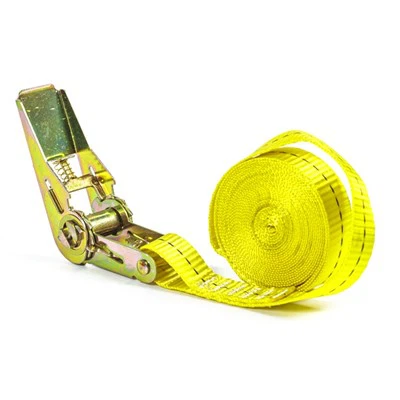
Do tractor tie down straps work well in cold weather? This is a question that often concerns farmers, construction workers, and anyone who needs to secure tractors during transportation, especially in regions with cold climates. As a supplier of high - quality tractor tie down straps, I've delved deep into this topic to provide you with a comprehensive answer.


The Science Behind Material Behavior in Cold Weather
To understand how tractor tie down straps perform in cold weather, we first need to look at the materials they are made of. Most tractor tie down straps are constructed from either polyester or nylon webbing.
Polyester webbing is known for its excellent strength and resistance to UV rays, moisture, and chemicals. In cold weather, polyester retains a significant amount of its strength. It has a relatively low coefficient of thermal expansion, which means it doesn't shrink or expand greatly with temperature changes. However, extreme cold can make polyester slightly stiffer. This stiffness might make it a bit more difficult to handle, for example, when you're threading the strap through a ratchet mechanism or adjusting it around the tractor.
Nylon webbing, on the other hand, is very strong and has good elasticity. It can stretch to absorb shock, which is beneficial when securing a tractor that might move during transit. But nylon is more sensitive to cold temperatures. In cold weather, nylon loses some of its elasticity. This loss of elasticity can be a double - edged sword. On one hand, it might seem that the strap will be less likely to stretch under load, which could provide a more secure hold. On the other hand, if the tractor shifts suddenly, a less elastic nylon strap might not be able to absorb the shock as effectively as it would in warmer conditions, increasing the risk of damage to the strap or the tractor.
Effects on Strap Components
It's not just the webbing material that is affected by cold weather; the hardware components of tractor tie down straps also face challenges.
Ratchet mechanisms are a crucial part of many tie down straps. In cold weather, the metal parts of the ratchet can contract. This contraction can lead to a tighter fit between the gears and other moving parts. While this might seem like it would improve the ratchet's performance, it can actually cause problems. The increased friction can make the ratchet harder to operate. You might find it more difficult to crank the ratchet to tighten the strap, and it could also be more challenging to release the ratchet when it's time to remove the strap.
Buckles, hooks, and other hardware can also be affected. Cold temperatures can make the metal more brittle. If a buckle or hook is subjected to a sudden impact or stress, there is an increased risk of it cracking or breaking. This is a serious safety concern, as a failed buckle or hook can cause the strap to come loose and the tractor to become unsecured during transportation.
Testing and Performance Data
At our company, we've conducted extensive testing on our tractor tie down straps in cold - weather conditions. We simulate different cold - weather scenarios in a controlled environment, ranging from mildly cold temperatures around 0°C (32°F) to extremely cold conditions below - 20°C (- 4°F).
Our tests show that our polyester - based tractor tie down straps maintain a high percentage of their rated strength even in very cold weather. For example, at - 10°C (14°F), our polyester straps retain over 90% of their strength compared to their performance at room temperature. The stiffness issue is noticeable but can be managed with a bit of extra effort during installation and adjustment.
For our nylon - based straps, we've found that at - 10°C (14°F), they lose about 15 - 20% of their elasticity. However, their overall strength remains relatively stable. The loss of elasticity becomes more pronounced at lower temperatures. At - 20°C (- 4°F), the elasticity loss can be up to 30%.
In terms of the hardware, we've made design improvements to our ratchet mechanisms to reduce the impact of cold - weather contraction. Our new ratchet designs have more precise tolerances and use lubricants that are formulated to work in cold temperatures. This has significantly improved the ease of use of our ratchet - style tie down straps in cold weather.
Real - World Applications
In real - world scenarios, tractor tie down straps are used in a variety of cold - weather situations. For example, farmers might need to transport tractors to different fields during the winter months. Construction companies might also need to move tractors to job sites in cold climates.
In these situations, proper installation and maintenance of the tie down straps are crucial. Before using the straps in cold weather, it's important to inspect them for any signs of damage, such as cracks in the webbing or hardware. If the straps have been stored in a cold environment, it's a good idea to let them warm up slightly before use to make them more flexible.
When installing the straps, take your time to ensure that they are properly tightened. In cold weather, it might be necessary to give the ratchet a few extra cranks to achieve the same level of tightness as in warmer conditions. And always follow the manufacturer's instructions for use and weight limits.
Our Product Solutions
As a supplier, we offer a range of tractor tie down straps to meet different needs in cold - weather applications.
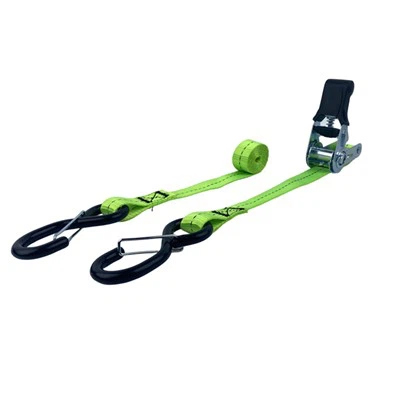
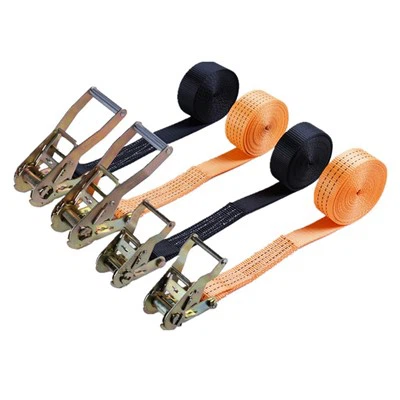
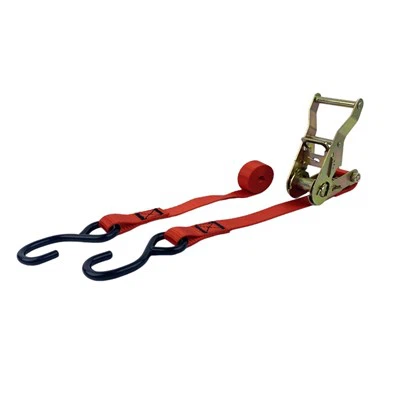
Our Ratchet Straps and Tie Downs are available in both polyester and nylon webbing options. The polyester ratchet straps are a great choice for cold - weather use due to their stability in strength. They come with our improved cold - weather ratchet mechanisms, making them easy to operate even in freezing temperatures.
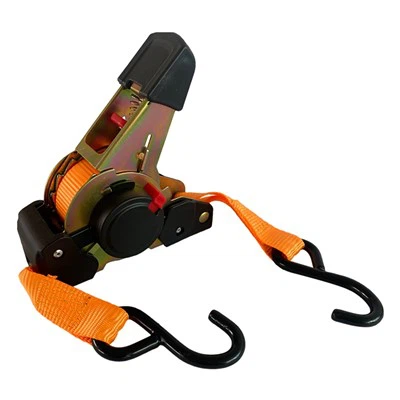
Our Cargo Buckle Ratchet Straps are another option. These straps are designed with a cargo buckle for easy and quick installation. The hardware on these straps is treated to resist corrosion and cold - weather brittleness, ensuring reliable performance in cold climates.
For those who need to secure tractors on trailers, our Vehicle Tie Down Straps For Trailer are specifically engineered. They have a high - strength design and are tested to perform well in cold weather, providing a secure hold for your tractors during transportation.
Contact Us for Your Tractor Tie Down Needs
If you're in the market for tractor tie down straps that can perform well in cold weather, we're here to help. Our team of experts can provide you with detailed information about our products, including their performance in different temperature ranges. We can also assist you in choosing the right straps for your specific needs, whether you're a small - scale farmer or a large - scale construction company.
Don't compromise on safety when transporting your tractors in cold weather. Contact us today to discuss your requirements and start the procurement process. We're committed to providing you with high - quality, reliable tractor tie down straps that will keep your equipment secure in any weather conditions.
References
- "Materials Science and Engineering: An Introduction" by William D. Callister Jr. and David G. Rethwisch. This book provides in - depth knowledge about the behavior of materials under different temperature conditions.
- Industry - specific research reports on tie down strap performance in cold weather, compiled by independent testing laboratories.
- Our company's internal testing data and research on tractor tie down strap performance in cold - weather simulations.