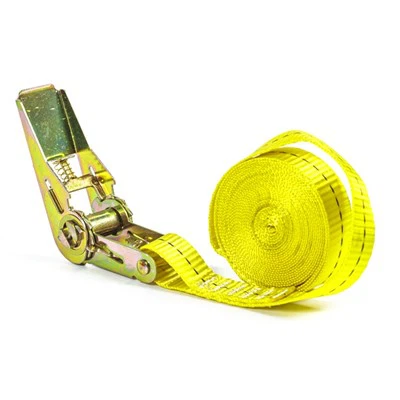
Are rope tie down straps resistant to UV rays?
As a supplier of rope tie down straps, I've encountered numerous inquiries regarding the UV resistance of our products. It's a crucial question, especially for customers who use these straps in outdoor environments where they're constantly exposed to sunlight. In this blog post, I'll delve into the science behind UV resistance in rope tie down straps, discuss the factors that affect it, and share how our company ensures the durability of our products under the sun.
The Science of UV Damage
Ultraviolet (UV) rays are a part of the electromagnetic spectrum emitted by the sun. There are three types of UV rays: UVA, UVB, and UVC. UVC rays are mostly absorbed by the Earth's atmosphere, but UVA and UVB rays can reach the surface and cause damage to various materials, including rope tie down straps.
UVA rays have a longer wavelength and can penetrate deeper into the material. They cause gradual degradation over time, leading to a loss of strength, flexibility, and color. UVB rays, on the other hand, have a shorter wavelength and are more energetic. They can cause more immediate damage, such as surface cracking and embrittlement.
When rope tie down straps are exposed to UV rays, the polymers in the material can undergo a process called photodegradation. This involves the breaking of chemical bonds in the polymer chains, which weakens the material and reduces its overall performance. The rate of photodegradation depends on several factors, including the type of polymer, the intensity and duration of UV exposure, and the presence of additives in the material.
Factors Affecting UV Resistance
Material Composition
The type of material used in the rope tie down straps plays a significant role in their UV resistance. Some polymers are naturally more resistant to UV rays than others. For example, polyester is known for its excellent UV resistance. It has a high melting point and is less prone to photodegradation compared to other materials like nylon. Polypropylene, on the other hand, is less resistant to UV rays and may require additional additives to improve its durability in outdoor conditions.
Additives
Many manufacturers add UV stabilizers and absorbers to the polymer during the manufacturing process to enhance the UV resistance of the rope tie down straps. UV stabilizers work by preventing the formation of free radicals, which are responsible for the breakdown of the polymer chains. UV absorbers, on the other hand, absorb the UV rays and convert them into heat, which is then dissipated from the material. These additives can significantly extend the lifespan of the straps in outdoor environments.
Color
The color of the rope tie down straps can also affect their UV resistance. Dark colors, such as black, tend to absorb more UV rays than light colors. This can lead to higher temperatures in the material, which can accelerate the rate of photodegradation. Light-colored straps, on the other hand, reflect more UV rays and are less likely to heat up, resulting in better UV resistance.

Our Company's Approach to UV Resistance
At our company, we understand the importance of providing rope tie down straps that can withstand the harsh effects of UV rays. That's why we take several steps to ensure the UV resistance of our products.
High-Quality Materials
We use only the highest quality materials in the production of our rope tie down straps. Our polyester straps are made from premium-grade polyester fibers that are known for their excellent UV resistance. We also carefully select our other materials, such as the hardware and webbing, to ensure that they are compatible with the polyester and can withstand the effects of UV exposure.
Advanced Manufacturing Processes
We employ advanced manufacturing processes that incorporate UV stabilizers and absorbers into the polymer. These additives are carefully formulated to provide long-lasting protection against UV rays. Our manufacturing process also ensures that the additives are evenly distributed throughout the material, providing consistent UV resistance across the entire length of the strap.
Rigorous Testing
Before our products are released to the market, they undergo rigorous testing to ensure their UV resistance. We use specialized equipment to simulate long-term UV exposure and measure the performance of the straps over time. This allows us to identify any potential issues and make necessary adjustments to our manufacturing process to improve the durability of our products.
Our Product Range
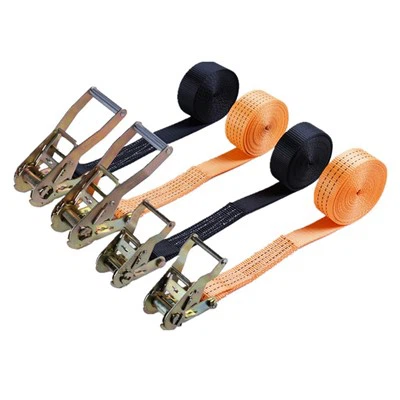
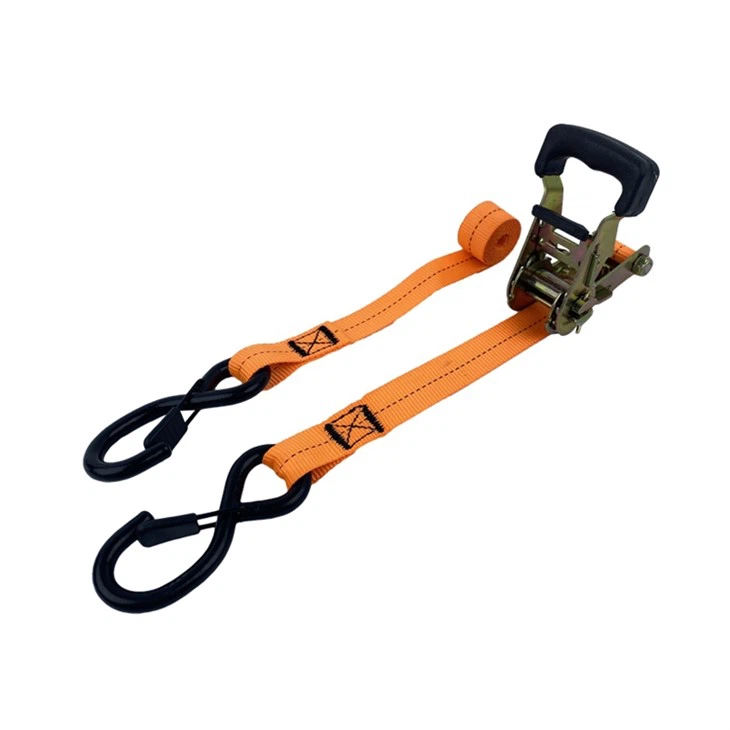
We offer a wide range of rope tie down straps to meet the diverse needs of our customers. Our 5 Ton Straps are designed for heavy-duty applications and are built to withstand the toughest conditions. They are made from high-quality polyester webbing and feature strong ratchet mechanisms for secure fastening.
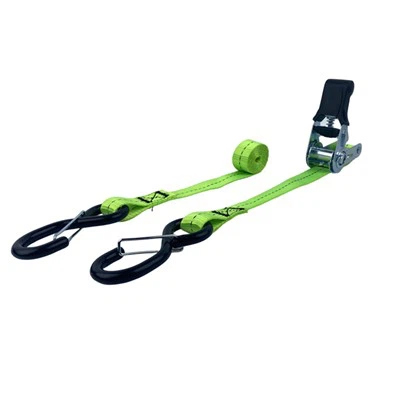
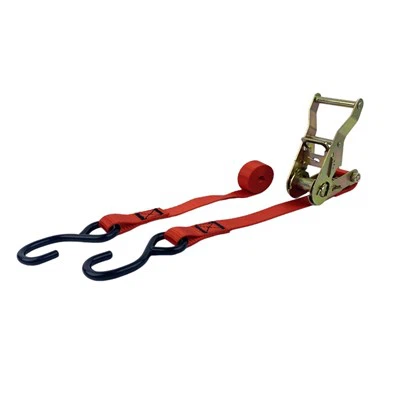
Our High Quality Ratchet Straps are suitable for a variety of applications, including securing cargo on trucks, trailers, and boats. They are available in different lengths and widths to accommodate different loads. Our ratchet straps are known for their reliability and durability, thanks to our advanced manufacturing processes and high-quality materials.
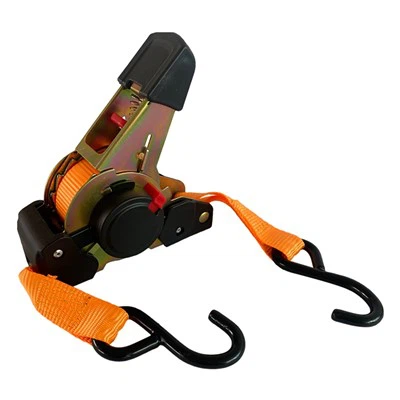
For motorcycle enthusiasts, we offer Motorcycle Ratchet Tie Down Straps. These straps are specifically designed to secure motorcycles during transportation. They are made from soft, non-abrasive materials that won't damage the motorcycle's finish, and they feature strong ratchet mechanisms for a secure hold.
Conclusion
In conclusion, the UV resistance of rope tie down straps is a crucial factor to consider when choosing the right product for your needs. By understanding the science behind UV damage and the factors that affect UV resistance, you can make an informed decision and choose a product that will provide long-lasting performance in outdoor environments.
At our company, we are committed to providing high-quality rope tie down straps that are resistant to UV rays. Our advanced manufacturing processes, high-quality materials, and rigorous testing ensure that our products meet the highest standards of durability and performance. Whether you need heavy-duty straps for industrial applications or lightweight straps for personal use, we have the right solution for you.
If you're interested in learning more about our products or would like to discuss your specific requirements, please don't hesitate to contact us. We look forward to the opportunity to serve you and help you find the perfect rope tie down straps for your needs.
References
- ASTM International. (2023). Standard Test Methods for Evaluating the Weatherability of Nonmetallic Materials.
- Wypych, G. (2017). Handbook of Photodegradation and Photostabilization.