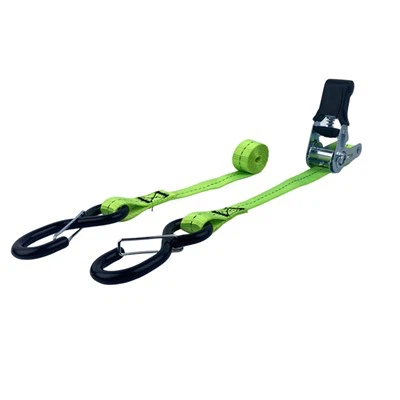
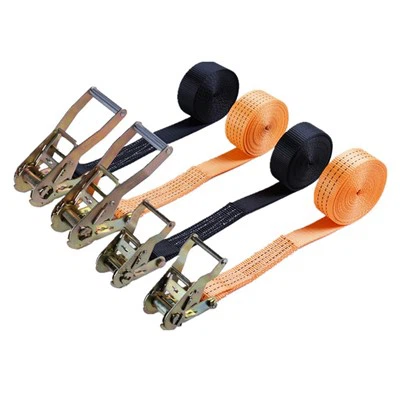
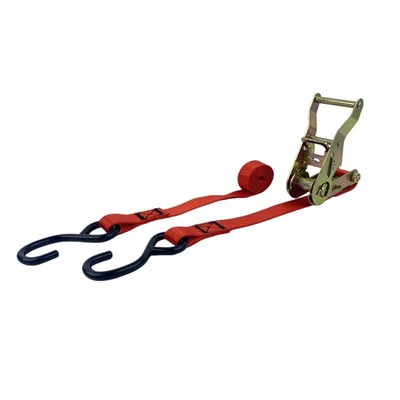
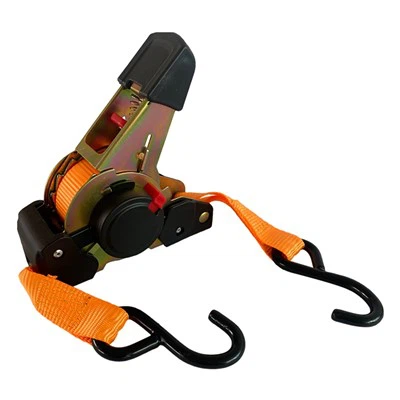
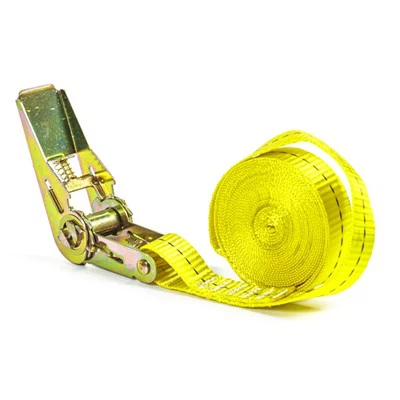
Determining the right length for a retractable tie down strap is crucial to ensure the safety and efficiency of your load securing applications. As a supplier of high - quality retractable tie down straps, I've seen firsthand the importance of getting the length just right. In this blog, I'll share some key factors and methods to help you figure out if a retractable tie down strap is the appropriate length for your specific needs.
Understanding Your Application
The first step in determining the right strap length is to have a clear understanding of your application. Are you securing a small item in the back of a pickup truck, or are you dealing with large, heavy equipment on a flatbed trailer? Different applications have different requirements.
For example, if you're transporting small furniture items in a van, you might need shorter straps that can be easily adjusted to fit around the objects. On the other hand, when securing large construction machinery on a trailer, longer straps are often necessary to reach from one anchor point to another.
Measuring the Distance
Once you understand your application, the next step is to measure the distance between the anchor points. Anchor points are the locations where you will attach the ends of the tie down strap. This could be the edges of a trailer, hooks on a rack, or other sturdy fixtures.


To measure the distance accurately, use a measuring tape. Make sure to measure the straight - line distance between the anchor points. However, keep in mind that you may need to account for some extra length to allow for proper tensioning. When you tighten the strap, it will stretch slightly, and you need to have enough length to create a secure hold.
Considering the Load
The size and shape of the load also play a significant role in determining the strap length. If you're securing a bulky load, you'll need a strap that can wrap around it completely. For irregularly shaped loads, you may need to adjust the length based on the longest part of the object.
For instance, if you're tying down a large, round barrel, you'll need to measure the circumference of the barrel and add some extra length for attaching the strap to the anchor points. Similarly, if you're securing a load with multiple protrusions, you need to ensure that the strap can go around all of them without being too short.
Accounting for Tensioning
Tensioning is the process of tightening the tie down strap to hold the load securely. When you tension a strap, it shortens in length due to the stretching of the material. Different types of retractable tie down straps have different stretch characteristics.
Some straps are made of materials that stretch more than others. For example, polyester straps are known for their relatively low stretch, while nylon straps may stretch more under tension. You need to account for this stretch when choosing the length of the strap.
As a general rule, it's a good idea to add a little extra length to the measured distance to ensure that you can achieve the proper tension. A common recommendation is to add about 10 - 20% of the measured distance to account for stretching during tensioning.
Checking Compatibility with Equipment
Another factor to consider is the compatibility of the strap length with your tie down equipment. Some retractable tie down straps come with built - in mechanisms for adjusting the length, such as ratchets or buckles. Make sure that the length of the strap is suitable for the operation of these mechanisms.
For example, if you're using a ratchet - style retractable tie down strap, the strap needs to be long enough to fit through the ratchet and still have enough length to create a secure hold. If the strap is too short, you may not be able to operate the ratchet properly, and you won't be able to achieve the necessary tension.
Using Our Product Range
At our company, we offer a wide range of retractable tie down straps to meet various application needs. Our Heavy Duty Ratchet Straps with Hooks are designed for heavy - duty applications and come in different lengths. Whether you need a short strap for a small load or a long strap for a large trailer, we have the right product for you.
Our Load Tie Down Straps are also available in various lengths and are suitable for different types of loads. These straps are made of high - quality materials to ensure durability and strength.
If you're looking for a specific load - capacity strap, our 1000 Lb Ratchet Straps are a great option. They are engineered to handle heavy loads and come in lengths that can be adjusted to fit your application.
Additional Tips
- Test the Strap: Before using a retractable tie down strap for a critical application, it's a good idea to test it with a similar load or in a non - critical situation. This will help you determine if the length is appropriate and if the strap can hold the load securely.
- Check for Wear and Tear: Regularly inspect your retractable tie down straps for any signs of wear and tear. If a strap is damaged, it may not perform as expected, and you may need to replace it. Make sure to choose a strap with a good warranty and follow the manufacturer's maintenance instructions.
Conclusion
Determining the right length for a retractable tie down strap requires careful consideration of your application, the distance between anchor points, the load, tensioning requirements, and equipment compatibility. By following the steps outlined in this blog, you can make an informed decision and choose the right strap for your needs.
If you have any questions about our retractable tie down straps or need help in selecting the appropriate length for your application, we're here to assist you. We invite you to reach out to us for more information and to discuss your specific requirements. Our team of experts is ready to provide you with the best solutions for your load - securing needs.
References
- "Tie Down Strap Basics", Safety Equipment Manufacturer's Association
- "Load Securement Guidelines", Federal Motor Carrier Safety Administration