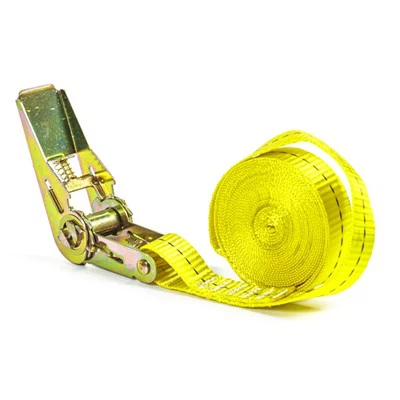
As a supplier of Straps and Tie Downs, I often get asked the question: "How do I know if a strap or tie - down is strong enough for my load?" It's a crucial question, especially when it comes to ensuring the safety of your cargo during transportation. In this blog post, I'll share some key factors and methods to help you determine if a strap or tie - down is suitable for your specific load.
Understanding Load Capacity Ratings
The first step in assessing if a strap or tie - down is strong enough is to understand load capacity ratings. Every strap and tie - down product comes with a specified Working Load Limit (WLL) and a Breaking Strength. The Working Load Limit is the maximum load that the strap or tie - down is designed to handle under normal working conditions. It is typically a fraction (usually around one - third) of the Breaking Strength, which is the amount of force required to break the strap or tie - down.
For example, if a strap has a Breaking Strength of 9,000 pounds, its Working Load Limit might be 3,000 pounds. It's important to always base your load calculations on the WLL, as exceeding this limit can lead to catastrophic failure of the strap or tie - down. When you're choosing a strap or tie - down for your load, make sure the WLL is equal to or greater than the weight of the cargo you'll be securing.
Types of Straps and Their Strengths
There are several types of straps and tie - downs available in the market, each with its own unique strength characteristics.
Ratchet Straps
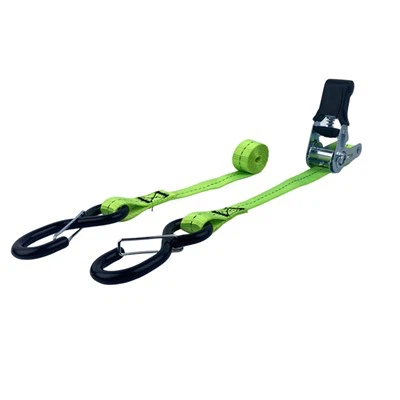
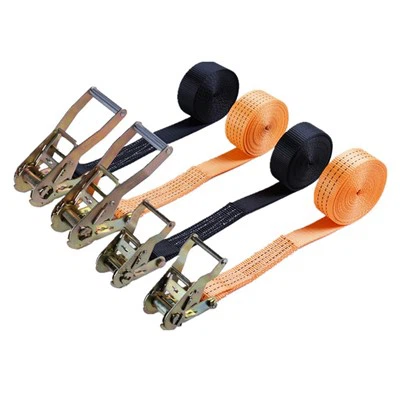
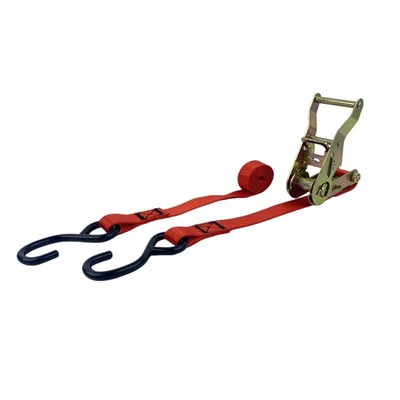
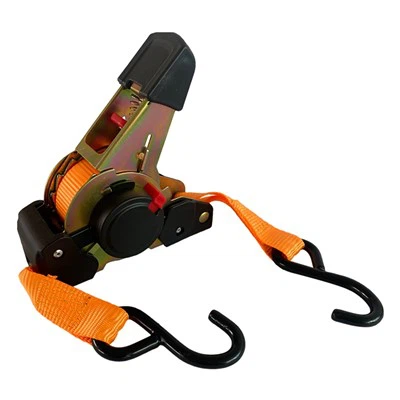
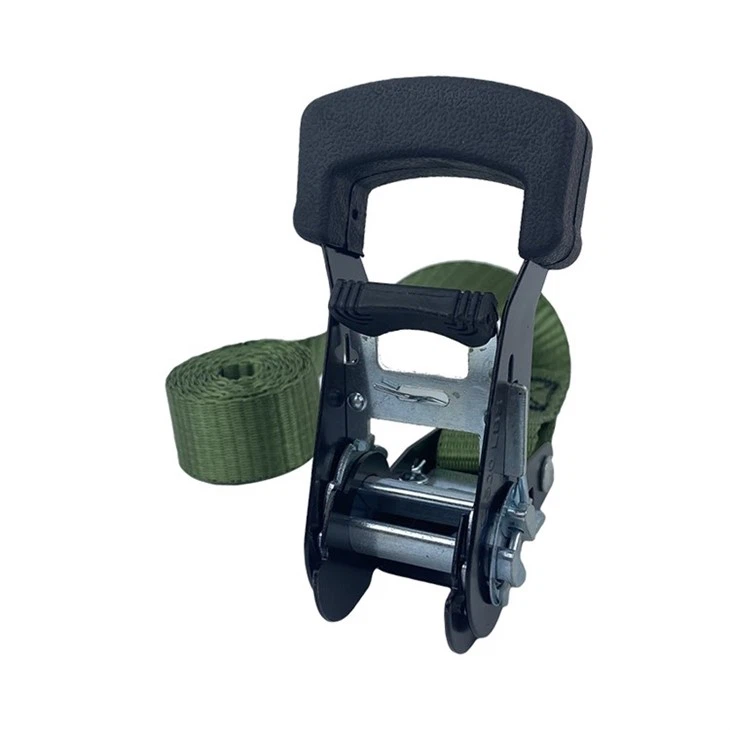
Ratchet straps are one of the most popular choices for securing heavy loads. They offer a high level of tensioning and are easy to use. Our High Quality Ratchet Straps are made from high - strength webbing and feature durable ratchet mechanisms. The webbing material used in ratchet straps can vary, with polyester being a common choice due to its high strength, low stretch, and resistance to abrasion and chemicals.
Cam Buckle Straps
Cam buckle straps are simpler in design compared to ratchet straps. They are ideal for lighter loads and applications where quick adjustments are needed. The strength of cam buckle straps depends on the quality of the webbing and the cam buckle itself. While they may not be as strong as ratchet straps, they are still reliable for many smaller - scale securing tasks.
Bungee Cords
Bungee cords are elastic and are often used for securing lighter items, such as tarps or small boxes. They have a lower load capacity compared to ratchet and cam buckle straps. The strength of a bungee cord is determined by its thickness, length, and the quality of the rubber used.
Factors Affecting Strap Strength
In addition to the type of strap, several other factors can affect the strength of a strap or tie - down and its ability to secure your load.
Abrasion
Abrasion can significantly weaken a strap over time. Sharp edges on your cargo or the surface it's resting on can cause the webbing to fray, reducing its strength. To prevent abrasion, you can use edge protectors. These are usually made of rubber or plastic and can be placed between the strap and the sharp edges of the cargo.

UV Exposure
Ultraviolet (UV) rays from the sun can break down the fibers in the webbing of a strap, making it weaker. If your straps are going to be exposed to sunlight for extended periods, look for straps that are UV - resistant. Some manufacturers treat their webbing with UV inhibitors to increase its lifespan.
Temperature
Extreme temperatures can also affect the strength of a strap. Cold temperatures can make the webbing more brittle, while high temperatures can cause it to lose its elasticity and strength. When choosing a strap, consider the environmental conditions in which it will be used.
Calculating the Number of Straps Needed
Once you've determined the appropriate type of strap and considered the factors affecting its strength, you need to calculate the number of straps required to secure your load.
The general rule of thumb is to use enough straps to evenly distribute the weight of the cargo. For example, if you're securing a large, heavy item, you might need multiple straps placed at different points along the length and width of the item.
Let's say you have a load that weighs 5,000 pounds and you're using straps with a WLL of 2,000 pounds each. You would need at least three straps to ensure that the total WLL of the straps (2,000 pounds x 3 = 6,000 pounds) is greater than the weight of the load.
Inspecting Straps Regularly
Even if you've chosen the right straps and calculated the correct number, it's essential to inspect them regularly for signs of wear and tear. Check for frayed edges, cuts, broken buckles, or any other damage. If you notice any issues, replace the strap immediately. A damaged strap can fail unexpectedly, putting your cargo and others at risk.
Choosing the Right Hooks
The hooks used with your straps are also crucial for ensuring a secure connection. Our Heavy Duty Tie Down Hooks are designed to withstand high loads and provide a reliable attachment point. Different types of hooks are available, such as J - hooks, S - hooks, and grab hooks, each suitable for different applications. Make sure the hooks you choose are compatible with your straps and have a load capacity that matches or exceeds the WLL of the straps.
Industry Standards and Regulations
It's important to be aware of industry standards and regulations when using straps and tie - downs. These standards are in place to ensure the safety of cargo transportation. For example, in the trucking industry, there are specific regulations regarding the use of straps and tie - downs to secure loads on Truck Trailer Straps. Make sure you comply with these regulations to avoid fines and, more importantly, to prevent accidents.
Conclusion
Determining if a strap or tie - down is strong enough for your load requires a combination of understanding load capacity ratings, choosing the right type of strap, considering factors that affect strength, calculating the number of straps needed, inspecting regularly, and using the appropriate hooks. As a supplier of Straps and Tie Downs, we're committed to providing high - quality products that meet your needs.
If you're unsure about which straps or tie - downs are best for your specific load, our team of experts is here to help. We can provide you with detailed information and guidance to ensure you make the right choice. Whether you're in the transportation industry, moving heavy equipment, or simply need to secure some items for a short - term project, we have the products and knowledge to support you. Contact us today to start a discussion about your procurement needs, and let's work together to find the perfect solution for your load - securing requirements.
References
- "Cargo Securement Handbook" by the Federal Motor Carrier Safety Administration
- Industry standards and guidelines for strap and tie - down manufacturing and usage.