

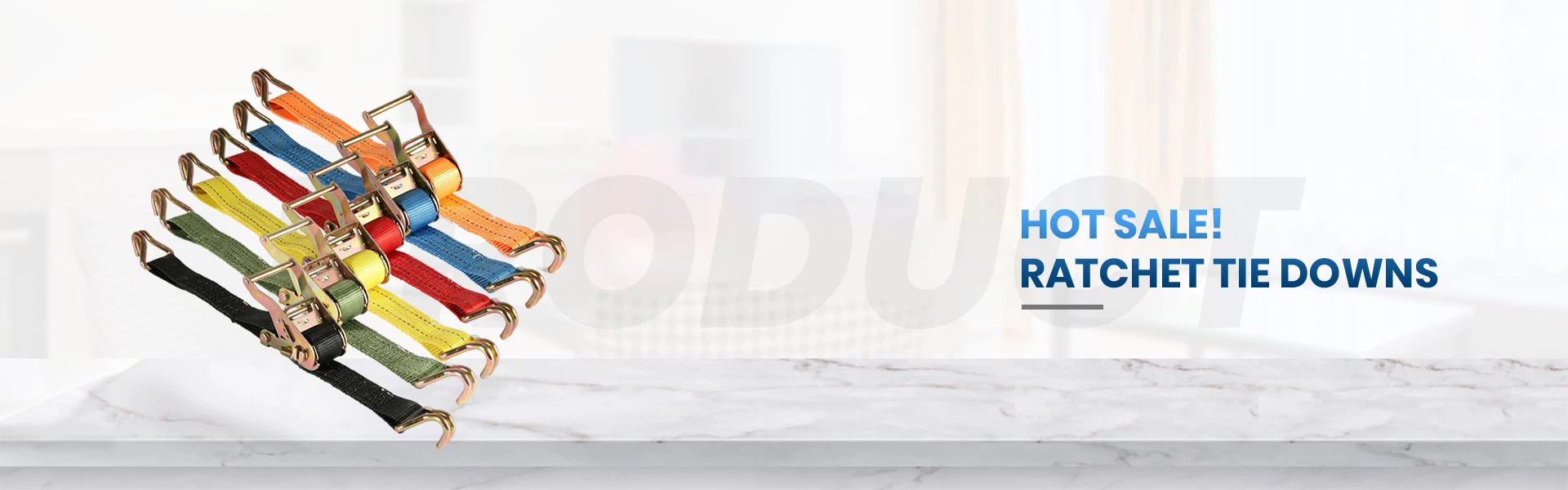


Heavy Duty Tie Down Hooks
What is Heavy Duty Tie Down Hooks
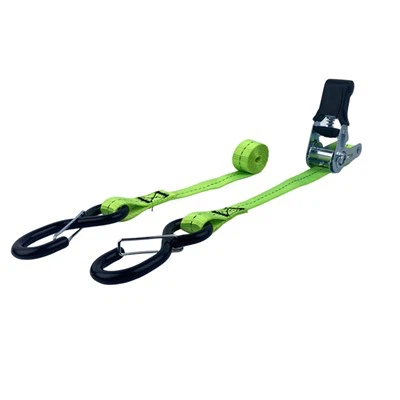
Heavy duty tie down hooks, or tie-down straps, are often constructed using one of several different types of hooks. Tie-down hooks attach a strap to anchor points commonly found on vehicles, trailers, or other platforms in order to safely secure cargo during transport.
Benefits of Heavy Duty Tie Down Hooks
Space-saving design:Heavy duty tie down hooks are designed to take up less space than traditional ones. They can be stored compact and tidy, freeing up valuable storage space. They are ideal for those who need to store large quantities of straps in a small drawer or storage box.
This feature is quite useful for a shipping and logistics company that needs to store hundreds of heavy duty tie down hooks in a small warehouse. Compared to traditional straps, retractable tie-downs can be stacked and stored more efficiently and saving space without the risk of getting tangled up and reducing clutter.
Highly durable:When it comes to durability, heavy duty tie down hooks are often more durable than their traditional counterparts. The retractable design protects the webbing from wear and tear, ensuring it lasts longer and can be used more often.
Versatile:Heavy duty tie down hooks are versatile and can be used in a wide range of industries and applications. They can be used to transport boxes, furniture, ATVs, UTVs, motorcycles, kayaks, boats, jet skis, lawn equipment, and heavy duties. These tie-downs can also be used in various settings like, as mentioned above, warehouses, construction sites, shipping and logistics companies, and factories.
Plus, by incorporating soft loops, you can create secure connection points when there are no suitable attachment points for the straps to hook onto. This ensures your cargo remains safe and secure during transport, regardless of shape or size.
Safer option:Heavy duty tie down hooks are designed and manufactured with safety in mind. The retractable technology reduces the risk of the strap becoming tangled or snagged, which can cause accidents or damage to the cargo and the vehicle carrying it. Additionally, retractable tie-downs have locking mechanisms that prevent the strap from accidentally releasing during transport.
For instance, imagine a truck driver who needs to transport heavy-duty equipment. heavy duty tie down hooks can ensure that the equipment is safely secured, even in the event of sudden braking or swerving.


why choose us
Professional Team
We are an original manufacturer with more than 10 years experience,we are very professional.
Custom Service
We support sample service, you can order samples to test the quality of our products before deciding whether to cooperate with us.
Online Service
We can provide customized services according to your specific needs, you can contact us at any time.
Our products
The price of our products is very competitive in the market, because we produce the research and development products by ourselves, we are the original manufacturer.
Heavy Duty Tie Down Hooks Safety Tips And Guidelines
Before and after every use of using tie down straps you should always look over your heavy duty tie down hooks for any potential damage they have received while in use or while in storage between usage. Some things to look out for include wear and tear, cuts in the webbing, fraying to the webbing, or other damage to the hardware or the strap. While it is very rare ensure that the hardware is also in good condition such as hooks, ratchets, or cam buckles for any defects, bends, corrosion, or other visible damage.
Make sure always to secure any loose ends of the heavy duty tie down hooks to prevent them from flapping around in the wind during transit as this can cause the straps to receive damage from fraying or friction burns causing the strap to be repaired or replaced over time.
Remember to always follow the strap working load limit rating tag that is sewn onto the strap and avoid exceeding this limit. Exceeding the limit can cause the strap to fail or become damaged causing a potentially dangerous situation while going down the road. You can view our full blog post on How to Understand Working Load Limits for further information on how to stay safe.
Ensure that the heavy duty tie down hooks you are using are tightened securely to help prevent any movement during transit that otherwise could cause your cargo to move out of place. You also want to make sure not to overtighten your straps as it can cause the strap or the cargo you are securing to become damaged. You will want to make sure the strap is snug if using ratchet straps and apply 2 to 3 additional clicks of the ratchet in most cases based on your best judgment.
5 Common Heavy Duty Tie Down Hooks and Their Uses
S-Hooks
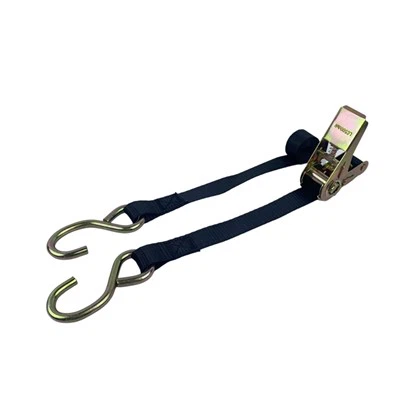
S-Hooks are the most commonly used tie-down hooks, and they are typically paired with ratchet buckles. A versatile style of tie-down end, S-Hooks easily attach to vehicle bumpers, thin trailer angles, and a wide range of anchors and D-Rings to secure a varying range of cargo. Accordingly, S-Hooks are ideal for securing:
● Mountain and dirt bikes;
● Furniture and moving boxes; or
● Pallets and animal feed.
S-Hooks come in several different sizes and may be fabricated from cold rolled or stainless steel. In addition, S-Hooks are available with zinc plating or vinyl coating.
Double J-Hooks
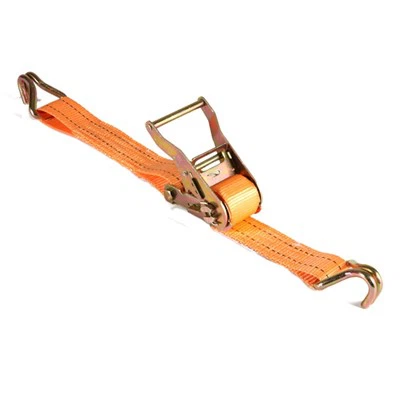
Although still considered to be all-purpose tie-down ends, Double J-Hooks, or double wire hooks, are generally preferred over S-Hooks for securing heavier cargo. Unlike S-Hooks, Double J-Hooks lie at a 90-degree angle to the plane of the strap, which provides for a direct connection to anchoring points and a flat strap surface area across cargo, preventing strap twist. Accordingly, Double J-Hooks are preferred for use with D-Rings, O-Rings, and trailer sides to secure large or heavy objects, such as:
● Motorcycles and sand rails;
● Canoes and Kayaks; or
● Welders and medium-sized tool boxes.
● Double J-Hooks are available in two-prong, single-prong, and "swiveling" variants. In addition, J-Hooks are also available with zinc or vinyl coating.
Flat Hooks
Flat Hooks are frequently used in combination with winch or ratchet buckles on large flatbed trailers to secure heavy and industrial cargo. Flat Hooks are constructed from a flat piece of square steel that is bent back on itself. This design enables a Flat Hook to secure into thin, flat anchor points, such as the sides of a flatbed trailer or stake pockets. During transport, Flat Hooks are preferred for securing:
● Backhoes and excavators;
● Industrial generators and engines; or
● Quantities of guardrail ties and steel support beams.
Flat Hooks are commonly available with zinc or vinyl coating.
Snap Hooks
Flat Hooks are frequently used in combination with winch or ratchet buckles on large flatbed trailers to secure heavy and industrial cargo. Flat Hooks are constructed from a flat piece of square steel that is bent back on itself. This design enables a Flat Hook to secure into thin, flat anchor points, such as the sides of a flatbed trailer or stake pockets. During transport, Flat Hooks are preferred for securing:
Large tents to the ground;
● Trailers to the tow hitch of vehicles; or
● Vehicles to the back of tow-trucks.
● Snap Hooks are commonly made from heat-treated alloy steel and are available with zinc plating and "twisted" variants.
Grab Hooks
Grab Hooks are frequently found in combination with winch or ratchet buckles, often used as part of cable, chain, or chain-and-webbing hybrid assemblies. Used extensively throughout the commercial and industrial sectors, Grab Hooks are preferred for securing and transporting large, high-weight objects, such as:
● Conex Boxes;
● Loads of Timber; or
● Heavy Equipment.
● Grab Hooks are commonly available in stainless, alloy, and forged steel. In addition, Grab Hooks are available with zinc plating.
How to Store Heavy Duty Tie Down Hooks
Store them away from the elements
Although a good heavy duty tie down hooks will be manufactured with UV-resistance, it's good practice to store straps out of sunlight. Not only will that reduce UV exposure, it will also prevent direct heat and weather from reaching the straps.
Store straps in a dry area to reduce the chance of mold and mildew. The goal is to mitigate any factors that will make the material brittle or compromise its strength.
If a strap becomes wet or saturated, allow it to air dry thoroughly before winding it up and wipe away any moisture from the ratchet mechanism as well.
Keep webbing folded up and secured
When not in use, the clean, dry webbing should be folded or rolled up neatly to avoid twists and kinks. Secure the webbing bundle with a Strap Wrap or similar. This will make it more compact for storing, and easier to take out and use when you need them next. No one wants to reach for a strap and be faced with a tangled mess.
Clean them periodically
Depending on what you're hauling, over time your strap webbing will most likely absorb grease, grime and road dust. To preserve the longevity of your strap, take a moment to occasionally clean the webbing thoroughly with mild soap and water.
Similarly, cleaning and maintaining the ratchet mechanismwill keep it operating smoothly time and time again. The last thing you want is to be rushed on a job and your ratchet mechanism sticks or hits grit. Mac's uses an easy-release ratchet mechanism that has eliminated a lot of the stickiness found in ratchets of lesser quality, however even the most expensive tool needs to be maintained.
Check out the working load limit
Heavy duty tie down hooks components such as ratchet straps, ropes, and buckles have a specific weighing capacity. For instance, a ratchet tie down might be rated to handle 16,200 lbs but never judge a tie-down based on its capacity rating. Instead, consider the working load limit which in this case would be 5400 lbs (1/3 of the capacity rating). While tying your cargo using a ratchet tie-down, the weight should not exceed 5400 lbs unless you want to use another tie-down.
Easy & quick installation
Buy tie-downs that take less than a minute to install. Drilling is no longer necessary as most of the tie-downs, now, can be quickly installed in the stake pocket of your truck. For instance, ratchets and cam buckles allow one to tighten straps without tying knots. If you are frequently involved in unloading the cargo without any help, go for cam buckles. You can use these with one hand!
Buy highly durable tie-downs
Never compromise on the quality of truck tie-downs even if it means shelling out extra bucks. Remember, the life of your fellow drivers is more important than money. Go for tie-downs that resist elements and offer unmatched protection. Stainless steel tie-downs are a great choice for the ultimate protection of your cargo as these are suited for all kinds of weather conditions.
Understand the needs to buy the right tie-down
Besides considering the above points, it's equally important to pay attention to what exactly you require from a heavy duty tie down hooks. Figure out your needs properly. For example, if you are carrying heavy objects, go for ratchets. These are considered to be excellent for moving recreational vehicles, lumber, and similar other objects. Go for cam buckles if you are dealing with lawn mowers, furniture, and grills.
Know the features
Before making the final call, thoroughly check the features of tie-downs. For instance, self-locking straps are meant for automatic security. Tie-downs featuring rings help you connect hooks for easy loading and unloading cargo. On the other hand, there are tie-downs with rings that need to be pushed down to protect straps and ropes.
Tie-downs are immensely crucial if you want to carry the cargo from one destination to another in a secure manner without causing damage to life & property. Buy one today to avoid getting into legal trouble!
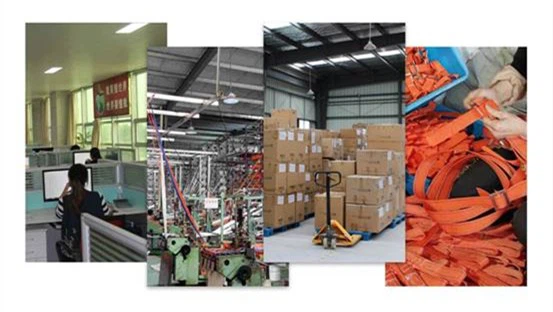
Taizhou Senkang protective equipment factory.One of the Professional Manufactures in the field of Cargo Lashing and Side curtain Buckles Industry.We focus on the Medium and High Quality market, with more than 10 years experience we have been successfully provided the Variety of Cargo lashings, including Ratchet Tie Down, Ratchet Buckle and Hooks to most European and the United States Clients.
Our Certificate
ISO9001,CE

Asked Questions
Q: What are the rules for tie down straps?
Q: How many tie-downs are required for heavy equipment?
Q: How much weight can tie-downs hold?
Q: What are tie downs and how can they be used to secure loads?
Q: How strong are tie downs?
Q: What regulations require that there should be at least one tie-down?
Q: Should tie-down straps be twisted?
Q: What is stronger than a ratchet strap?
Q: What is the maximum number of tie downs for a 20 foot load?
Q: How long do tie downs last?
Q: How do you secure heavy equipment?
Q: How many tie downs are required for a 17 ft load?
Q: When using tie downs what weight should they be able to secure to prevent movement?
Q: What is the best knot for securing loads?
Q: Who is responsible for load securement?
Q: What is the best type of tie down?
Q: How much weight can a ratchet strap lift?
Q: How many tie downs are required?
Q: What is rule infraction in tie-down roping?
Q: Should cargo have at least two tiedowns and then one tiedown for each?
Hot Tags: heavy duty tie down hooks, China heavy duty tie down hooks manufacturers, suppliers, factory, adjustable length tie downs, chain tie downs, weather resistant tie downs, construction tie downs, wire tie downs, high-quality tie downs
You Might Also Like


Send Inquiry