




Tractor Tie Down Straps
What is Tractor Tie Down Straps
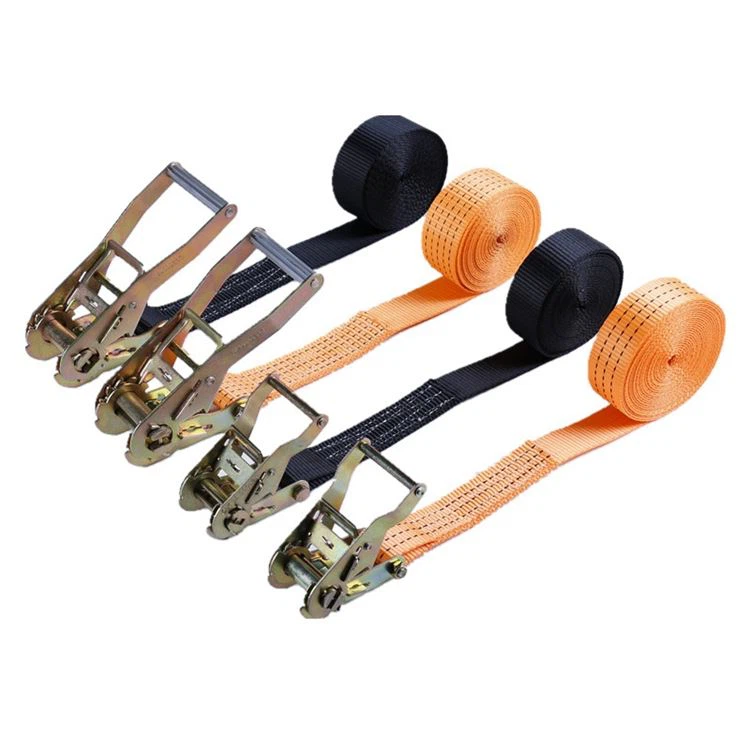
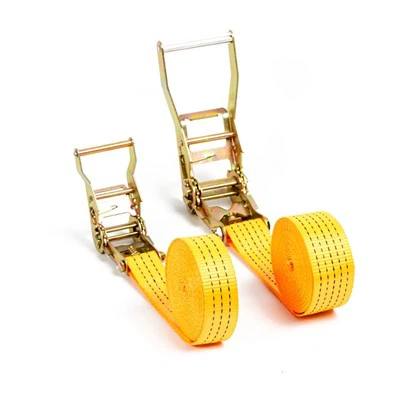
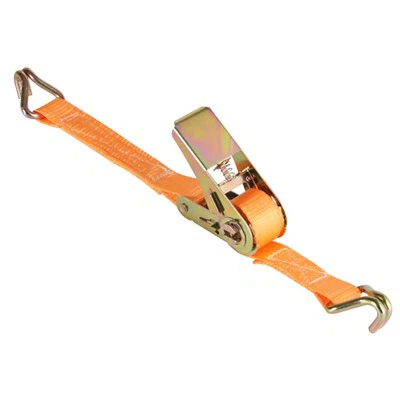
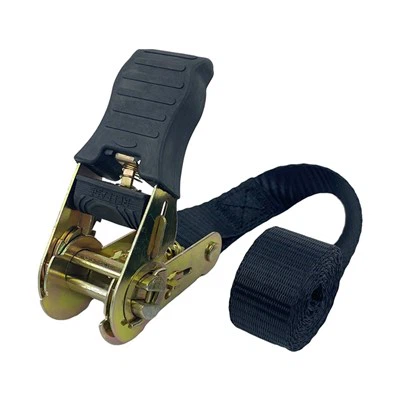
A tractor tie down straps is a fastener used to hold down cargo or equipment during transport. Tie down straps are essentially webbing that is outfitted with tie down hardware. This hardware allows the tie down strap to attach to the area surrounding the cargo or equipment, loop over the cargo or equipment, and/or attach to the cargo or equipment. It usually also includes a method of tensioning the strap, such as a ratchet.
Benefits of Tractor Tie Down Straps
Reliable
Tractor tie down straps usually have webbing that is very strong, weather resistance, non-abrasive and low stretch, like polyester webbing. This means cargo will be securely tightened without sustaining any damage and can be transported in many weather conditions.
Safe
Since your cargo is safely secured, you can transport it with peace of mind knowing that it will not fall off the trailer, pick-up truck or roof rack and damage the cargo in the process. This is especially important in high-traffic areas where the safety of others and their property is a major concern.
Variety of fittings
Tractor tie down straps come with a variety of fittings that can be used in a number of applications depending on your needs. The fittings they can come with are: flat snap hooks, e-track double stud fittings, d-rings, e-track fittings, flat hooks, chain extensions, vinyl coated wire hooks and many more.
Effortless
Due to the ratcheting system of these tractor tie down straps, you are given a mechanical advantage when it comes to tightening the load to make sure that everything is secure. They also make the job of loading and offloading large and bulky cargo easier and faster without needing a lot of man power.
Variety of sizes
It does not matter if your situation is lightweight (like securing your load to a roof rack, for example). There are suitable mini versions of tractor tie down straps with strength ratings of up to 1,500kgs. For larger applications, you can get ratchet straps that go up to 20m in size and offer a strength rating of up to 10,000kgs.




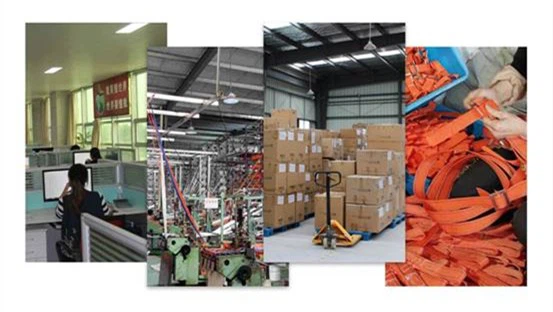
why choose us
Professional Team
We are an original manufacturer with more than 10 years experience,we are very professional.
Custom Service
We support sample service, you can order samples to test the quality of our products before deciding whether to cooperate with us.
Online Service
We can provide customized services according to your specific needs, you can contact us at any time.
Our products
The price of our products is very competitive in the market, because we produce the research and development products by ourselves, we are the original manufacturer.
Types of Tractor Tie Down Straps and Mechanisms
Lashing straps
Lashing Straps feature an easy-to-use gator clip, and are generally the lightest-duty tie-down strap with a maximum of 100-lb working load and 220-lb break strength. They are designed for use on cargo carriers, game carts, and other small loads.
Cam buckle straps
Cam Buckle Straps are generally lighter-duty than ratchet straps but heavier-duty than lashing straps. They are designed for use with medium-sized loads such as dirt bikes and ATVs, and can have up to a 500-lb working load and 1,500-lb breaking strength. They are easy and quicker to tighten and release than a ratchet strap, but cannot safely secure as much weight.
Ratchet straps
Ratchet Straps are named for their method of locking and securing the strap via an easy-to-use ratcheting system. Ratchet straps can have a working load limit up to 5,000 lbs. with a 15,000-lb break strength rating, and can create a tighter and more secure restraint – ideal for solid, heavy loads. If you're not sure how to use a ratchet strap, please read our article on How to Use Ratchet Straps, which includes a step-by-step instructional video.
Maintaining Your Tractor Tie Down Straps Buckles
Regularly clean your ratchet handle assembly. Use a wire brush to remove any dirt or grime build up on the surfaces or in the moving parts of the ratchet.
Once or twice a year lubricate your ratchet straps in order to keep them in ideal working condition. Apply lubricating oil, such as dry silicone spray or WD-40, to the moving parts of the ratchet handle assembly. Be sure to dry off any excess lubricant.
Inspect your straps webbing before and after each use. Look for frayed fibers where a sharp edges may have come into contact with the strap.
Check that the ratchet handle assembly is free of damage and operates smoothly.
When storing your tractor tie down straps, keep them out of direct sunlight. Over time UV light can make synthetic fibers brittle and prone to breakage. Also, avoid storing your ratchets where moisture, oil and grease, or abrasive materials could negatively impact their condition.
Disassemble your straps at the after use to prevent the webbing from becoming a tangled mess or getting caught up in the ratchets spindle or teeth.

Start by attaching each hooked end of your tie down to a secure anchor point on your truck or trailer. Position the strap across the cargo you want to secure.
Next, cycle the tractor tie down straps until the open slot on the axle faces upwards when the handle is in the closed position.
Feed the open end of the webbing through bottom side of the axle and pull all of the slack through
Open and close your ratchet 3 or 4 times to tighten it down. Return the handle to the closed position to lock it in place. Be sure not to over tighten.
To disengage your tractor tie down straps, pull down on the center release bar and rotate the handle a full 180 degrees until you hear a click and tension is released.
Choose The Suitable Tractor Tie Down Straps According To Your Load
Weight capacity
The load of the cargo is the basic thing that must be known before deciding the number of tractor tie down straps required. You need to know how much weight a strap will be able to carry. Generally, 2 straps are the basic requirement for any type of load.
Tractor tie down straps length
The strap must be long enough so that it covers the whole load and is properly tied down from all the points. The strap should not be very long nor should it be small as it will compromise the load safety. If the tractor tie down straps is short then it won't be able to cover up the whole load and if it is too big then it won't give adequate strength and support to the cargo as it will be loose. So, an appropriate strap length is necessary.
Strength of the tie down straps
There is a load rating for every tractor tie down straps. It is important to make sure that the load rating of the strap is higher than the load that is being transported to make it safe. There are many other factors that must be considered in a total load of cargo and those are wind resistance, bump on the road, etc. So, all these factors must be observed to make your cargo safe and secure.
Type of hook at tie-down straps end
These hooks are attached at the end of the strap and are used to connect the strap to the anchor point. There are various types of hooks that are available at strap end fitting such as s-hooks, flat hooks, wire hooks, etc. The type of hook has to be selected on the basis of the anchor point. The s-hook is compatible with almost all kinds of anchor points. Whereas, the flat hooks can be used where the anchor point is flat and are mostly used in flatbed trailers. There are also certain hooks that come with safety latches. Because of these safety latches, the hooks won't come off the anchor point easily. This makes the cargo more secure and safe.
Locking in ratchet straps
Built-in locks are also installed in some straps that act as an additional feature. They provide extra support and safety to the cargo. If the load that is being carried needs extra support and security then these straps are very important and must be used in such cases.
Tie-down straps can also get damaged from the corner of the loads. Corner protectors are used in order to stop the tie-down straps from damaging. If the load is fragile or sensitive then corner protectors can be very helpful in such cases. With the help of these protectors, the load won't get damaged because of the straps or chains. They are not costly and act as a perfect material for the overall safety of strap and cargo.
Before using any tractor tie down straps, always inspect the webbing and ratchet handle assembly to make sure they are free of damage.
Keep your tie-down straps out of the sun during storage. Over time, ultraviolet light can make nylon and polyester fibers brittle, causing them to discolor, break down and potentially lose strength.
If a tie-down strap gets wet or damp during use, allow it to dry thoroughly before storing it away to prevent mildew.
Remove the strap's webbing from the ratchet handle assembly between uses to prevent the strap from wrapping around the ratchet spindle or bunching up within the teeth of the ratchet.
After each use, wrap the cargo tractor tie down straps webbing around the ratchet and secure it with a rubber band or Velcro strap. Even better, keep all of your ratchet straps stored safely together in a carrying bag.
Apply lubricating oil, such as dry silicone spray, to the moving parts of the ratchet handle assembly. WD-40 also works well, but do not get the lubricant on the webbing, as it will attract dirt and eventually cause the strap to bind.
Always inspect the tractor tie down straps after each use. Look for frayed fibers where a sharp edge may have come into contact with the strap. To prevent further damage from corners, use rubber corner strap protectors; they are inexpensive, easy to use, and will help maintain the integrity of your tie-down straps.
Tie items together or to the sides in the back of your van
Although you can't use your old straps to secure very heavy cargo items, you can still use them to secure smaller objects or furniture within the back of your van.
Secure luggage/roof boxes to the top of your vehicle
Have you ever found yourself trying to drive with something that is never going to fit within your vehicle? Perhaps you have large baggage items such as ski's or snowboards, or a roof box. You can use your old straps to tie luggage and secure it to the top of your vehicle as this won't require as much strength as cargo securing. You can also use them as an extra measure to secure your roof box – you can't make something too secure right?
Stop items from sliding around or jumping up in your truck bed
If you have a truck that you often carry loose items around in, you can use old ratchet straps to keep these in position and prevent them from sliding, jumping or bashing around. Simply tie your strap around the object(s) and secure it to the floor or the side of your truck bed.
Use them to keep bins and lids shut during storms
When it's windy out, bins and baskets with lids on that you might store in your garden or driveway tend to get blown about. One way to make sure that nothing comes out of them is to use your old ratchet straps to keep the lids nice and tightly shut. Simply tie your strap around the bin vertically so that the lid cannot open once it's pulled tight and you won't have to worry about the weather flinging your rubbish everywhere!
Use them for hanging storage in your garage
Have you ever run out of space in your garage, wondering if there was any way to squeeze more in? Well that's where your old ratchet straps come into play. You'll need to find a way to secure them to the ceiling, but once you have, they can be used as hanging storage for all kinds of things. Kayaks, bikes, empty suitcases, empty roof boxes and so much more!
Taizhou Senkang protective equipment factory.One of the Professional Manufactures in the field of Cargo Lashing and Side curtain Buckles Industry.We focus on the Medium and High Quality market, with more than 10 years experience we have been successfully provided the Variety of Cargo lashings, including Ratchet Tie Down, Ratchet Buckle and Hooks to most European and the United States Clients.
Our Certificate
ISO9001,CE

Asked Questions
Q: What are the requirements for tie down straps?
Q: What length tie down straps do I need?
Q: How strong should tie down straps be?
Q: What are the rules for chain tie downs?
Q: How often should you replace tie down straps?
Q: What regulations require that there should be at least one tie down?
Q: Should you twist a tie-down strap?
Q: Can you shorten tie-down straps?
Q: How do you determine tie length?
Q: Why do my tie down straps keep coming loose?
Q: Do regulations allow use of unmarked tie downs?
Q: How many straps on a load?
Q: Who is responsible for load securement?
Q: What are tie-down straps called?
Q: Can you tow with tie-down straps?
Q: What is the perfect tie length?
Q: What is the most common tie length?
Q: What does working load limit mean for straps?
Q: What is the minimum distance between tie downs to prevent shifting of cargo?
Q: What is the capacity of a tie down?
Hot Tags: tractor tie down straps, China tractor tie down straps manufacturers, suppliers, factory, shipping tie downs, combine harvester tie downs, cheap tie downs, auction site tie downs, prevent shifting tie downs, moisture resistant tie downs
Previous
Truck Ratchet Tie Down StrapsYou Might Also Like

Send Inquiry