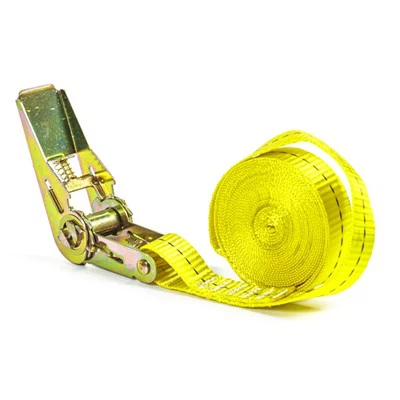
Hey there! As a supplier of Automotive Tie Down Straps, I've seen all sorts of loads being transported and all kinds of tie - down strap choices, good and bad. So, I thought I'd share some tips on how to choose the right automotive tie - down strap for a specific load.
Know Your Load
First things first, you gotta know what you're tying down. What's the weight of the load? Is it a heavy piece of machinery, a light - weight motorcycle, or maybe some bulky furniture? The weight of the load is crucial because it determines the strength rating you need for your tie - down strap.
For instance, if you're transporting a small UTV, you can check out our Tie Down Straps For Utv. These straps are designed to handle the weight and size of UTVs, providing a secure hold during transit. But if you're moving a large construction vehicle, you'll need a strap with a much higher weight - capacity.
Another thing to consider about the load is its shape. Is it irregular, with sharp edges or corners? If so, you might need to use edge protectors along with your tie - down strap to prevent the strap from getting cut or damaged. A rectangular, smooth - surfaced load is easier to secure than something with a complex shape.
Understand Strap Materials
There are different materials used to make automotive tie - down straps, and each has its own pros and cons.
Nylon Straps
Nylon is a popular choice. It's strong, flexible, and has some stretch to it. This stretch can be an advantage in some cases because it can absorb shock during transportation, like when you hit a bump on the road. However, nylon can also absorb water, which might cause it to weaken over time if it gets wet frequently.
Polyester Straps
Polyester straps are another option. They don't stretch as much as nylon, which means they can provide a more stable hold. They're also resistant to UV rays and moisture, making them a great choice for outdoor use. If you're transporting something over long distances in different weather conditions, polyester might be the way to go.
Chain Straps
Chain straps are the heavy - duty option. They're extremely strong and can handle very high weights. But they're also heavier and more rigid than nylon or polyester straps. They're often used for large industrial loads where a high level of strength is required.
Consider Strap Length
The length of the tie - down strap is important. You want a strap that's long enough to reach from the anchor point on your vehicle to the load and still have enough length to secure it properly. But you don't want it to be too long either, as excess strap can flap around and become a safety hazard.
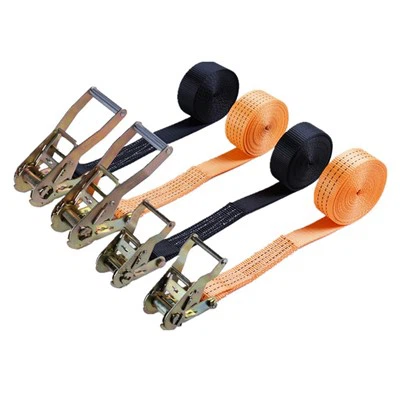
If you have a particularly large load or need to reach far - off anchor points, our Extra Long Ratchet Straps could be the solution. These straps are designed to give you the extra length you need without sacrificing strength.
Evaluate Strap End Fittings
The end fittings of the tie - down strap are what connect it to the load and the vehicle. There are several types to choose from.
Hooks
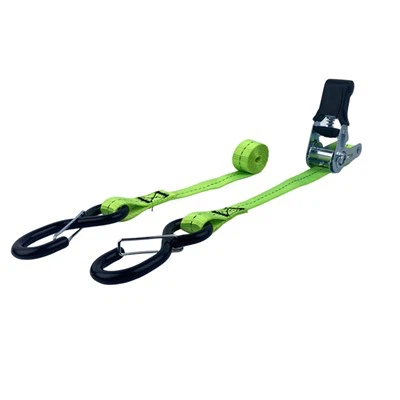
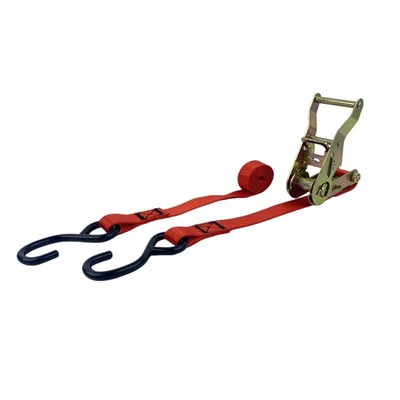
Hooks are the most common end fittings. There are different kinds of hooks, like J - hooks, S - hooks, and grab hooks. J - hooks are great for securing to flat surfaces, while S - hooks can be used in a variety of situations. Grab hooks are designed to quickly grab onto a surface, which can be handy when you need to secure a load in a hurry.
Buckles
Buckles are another option. Ratchet buckles are very popular because they allow you to easily tighten and loosen the strap. You can get a really tight hold on the load with a ratchet buckle. There are also cam buckles, which are simpler and more lightweight but might not provide as strong a hold as ratchet buckles.
Think About Special Features
Some tie - down straps come with special features that can make your life easier.
Retractable Straps
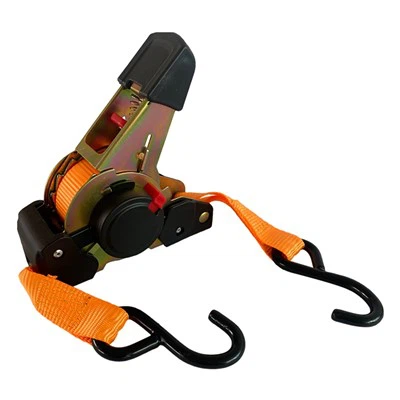
Retractable tie - down straps, like our Retractable Tie Down Strap, are really convenient. They can be easily stored when not in use and quickly pulled out when you need to secure a load. They also help keep the strap organized and prevent it from getting tangled.
Reflective Straps
Reflective straps are a good idea if you're transporting at night. They increase the visibility of your load, which can improve safety on the road.
Check the Working Load Limit (WLL)
Every tie - down strap has a Working Load Limit (WLL), which is the maximum weight that the strap is designed to safely handle. It's important to never exceed this limit. You can usually find the WLL printed on the strap or on its packaging.
When choosing a strap, make sure its WLL is higher than the weight of your load. It's also a good idea to add a safety margin. For example, if your load weighs 1000 pounds, you might want to choose a strap with a WLL of at least 1500 pounds to be on the safe side.
Comply with Regulations
There are regulations regarding the use of tie - down straps for transportation. Different states and countries might have different rules, so it's important to check the local regulations before you hit the road.
These regulations often specify things like the minimum number of tie - down straps you need for a certain weight of load, the proper way to secure the straps, and the use of safety devices like edge protectors.


Conclusion
Choosing the right automotive tie - down strap for a specific load isn't as simple as just grabbing any strap off the shelf. You need to consider the load's weight, shape, the strap's material, length, end fittings, special features, WLL, and local regulations.
If you're still not sure which strap is right for your load, don't hesitate to reach out to us. As a supplier of Automotive Tie Down Straps, we have the expertise to help you make the best choice. Whether you're a professional transporter or just moving something for personal use, we can provide you with the right straps and advice. Contact us to start the procurement process and get your load secured safely.
References
- General knowledge about automotive tie - down straps from industry experience.
- Information from tie - down strap manufacturers and industry standards.