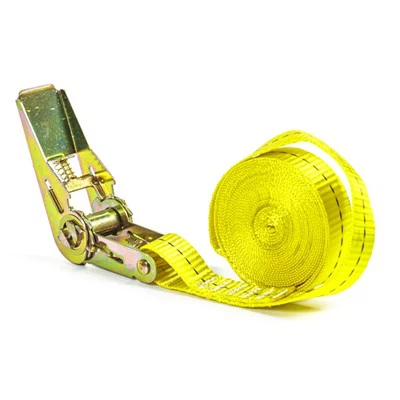
Measuring the length of automotive tie down straps is a crucial step in ensuring the safe and secure transportation of vehicles, equipment, and cargo. As a trusted supplier of automotive tie down straps, I understand the importance of getting the measurements right. In this blog post, I'll share some practical tips on how to accurately measure the length of these straps, why it matters, and how our high - quality products can meet your needs.


Why Accurate Measurement is Essential
Before delving into the measurement process, it's important to understand why getting the length of automotive tie down straps correct is so vital. Firstly, improper strap length can lead to inadequate restraint. If the strap is too short, it may not be able to reach the attachment points on the vehicle or cargo, leaving the load unsecured. On the other hand, if the strap is too long, it can create slack, which may cause the load to shift during transit. This shifting not only poses a risk of damage to the cargo but also endangers other road users.
Secondly, accurate measurement helps in optimizing the use of the straps. Using the right - sized straps reduces waste and ensures that you're getting the most out of your investment. It also helps in maintaining the integrity of the straps. Over - tightened or under - tightened straps due to incorrect length can lead to premature wear and tear, reducing the lifespan of the product.
Tools Required for Measurement
To measure the length of automotive tie down straps, you'll need a few basic tools. A measuring tape is the most essential tool. Make sure to choose a measuring tape that is long enough to accommodate the length of the straps you'll be measuring. A flexible measuring tape is preferable as it can easily conform to the shape of the strap.
In addition to a measuring tape, a marker or pen can be useful. You can use it to mark the starting and ending points of the measurement on the strap, especially if the strap has a complex shape or if you're measuring multiple sections.
Measuring a Straight Automotive Tie Down Strap
The simplest case is measuring a straight automotive tie down strap. Lay the strap out on a flat surface. Ensure that the strap is completely straight and not twisted. Start the measurement from one end of the strap, which could be the end with the hook or the buckle. Extend the measuring tape along the length of the strap until you reach the other end. Make sure to measure along the centerline of the strap for the most accurate measurement.
If the strap has additional components such as hooks or buckles, decide whether you want to include these in the measurement. In most cases, for standard automotive applications, you'll want to measure from the end of one hook to the end of the other hook. This gives you the overall length that will be used to secure the load.
Measuring a Strap with Loops or Curves
Some automotive tie down straps may have loops or curves, especially those designed for specific applications. When measuring a strap with loops, first, straighten out the loop as much as possible without stretching the strap. You can use your hands to gently manipulate the loop into a more linear shape.
Start the measurement at the beginning of the strap, just as you would with a straight strap. Follow the path of the strap around the loop, keeping the measuring tape close to the surface of the strap. When you reach the end of the loop, continue measuring along the remaining length of the strap until you reach the other end.
For straps with multiple curves or bends, break the measurement into smaller sections. Measure each section separately and then add up the lengths of all the sections to get the total length of the strap. Use the marker or pen to mark the starting and ending points of each section to avoid confusion.
Measuring Straps with Attachments
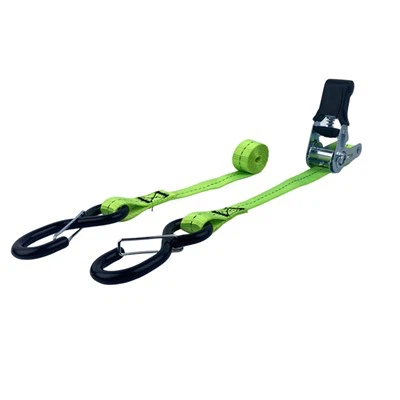
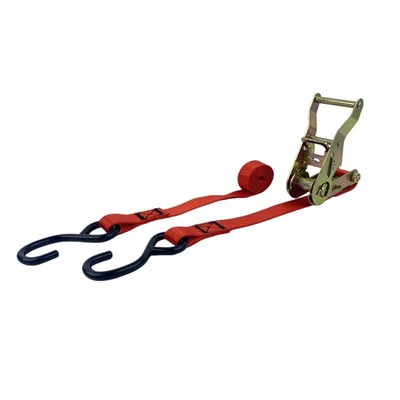
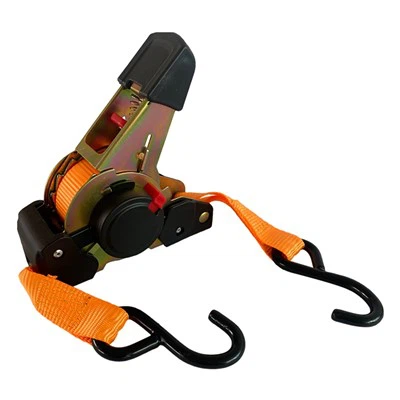
Automotive tie down straps often come with various attachments such as hooks, ratchets, and buckles. When measuring a strap with these attachments, you need to decide whether to include the length of the attachments in your measurement.
If you're using the strap to secure a load between two fixed points, it's usually best to measure from the end of one hook to the end of the other hook. This gives you the effective length that will be used to create tension and secure the load. However, if you're interested in the total length of the strap including all its components for inventory or storage purposes, measure from the outermost point of one attachment to the outermost point of the other attachment.
Special Considerations for Different Types of Straps
There are different types of automotive tie down straps available in the market, each with its own unique features. For example, Marine Ratchet Straps are designed for use in marine environments. These straps may have additional protective coatings or features to resist corrosion from saltwater. When measuring marine ratchet straps, the process is similar to measuring regular automotive straps. However, make sure to check for any additional components or features that may affect the measurement.
Vehicle Tie Down Straps For Trailer are specifically designed to secure vehicles on trailers. These straps often have adjustable lengths to accommodate different vehicle sizes and trailer configurations. When measuring these straps, pay attention to the adjustable sections. Measure the minimum and maximum lengths of the adjustable part to get a full understanding of the strap's range of use.
Our High - Quality Automotive Tie Down Straps
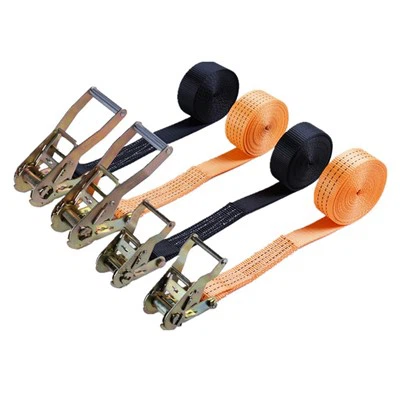
At our company, we offer a wide range of High Quality Ratchet Strap products. Our straps are made from durable materials that can withstand the rigors of transportation. We understand that accurate measurement is key to the proper use of our products, and we provide detailed information about the length and specifications of each strap on our website.
Our team of experts is also available to assist you in choosing the right strap for your specific needs. Whether you're transporting a small car on a trailer or heavy equipment, we have the right solution for you. Our straps are designed to provide maximum security and reliability, ensuring that your cargo arrives at its destination safely.
Importance of Following Manufacturer's Guidelines
When measuring automotive tie down straps, it's important to follow the manufacturer's guidelines. Different manufacturers may have slightly different methods of measurement or may specify whether certain components should be included in the measurement. The manufacturer's guidelines also provide information about the recommended usage and maintenance of the straps.
By following these guidelines, you can ensure that you're using the straps correctly and getting the best performance out of them. It also helps in maintaining the warranty of the product. If you deviate from the manufacturer's guidelines, it may void the warranty, leaving you without any protection in case of product failure.
Conclusion
Measuring the length of automotive tie down straps is a straightforward process if you have the right tools and follow the proper techniques. Accurate measurement is essential for the safe and effective use of the straps, as well as for optimizing your investment. Whether you're dealing with a straight strap, a strap with loops, or a strap with attachments, the key is to ensure that the strap is laid out properly and that the measurement is taken along the correct path.
As a leading supplier of automotive tie down straps, we're committed to providing you with high - quality products and expert advice. If you have any questions about measuring our straps or need help in choosing the right product for your needs, don't hesitate to contact us. We're here to assist you in every step of the process, from measurement to installation and beyond. Contact us today to start a conversation about your automotive tie down strap requirements and let us help you find the perfect solution for your transportation needs.
References
- General knowledge about automotive tie down straps and measurement techniques from industry experience.
- Product manuals and specifications provided by leading manufacturers of automotive tie down straps.