When dealing with the transportation of automotive and other heavy - duty cargo, tie - down straps play a crucial role. One of the most important aspects to understand about these straps is their static load capacity. As a well - established automotive tie - down straps supplier, I am here to shed light on what exactly the static load capacity of automotive tie - down straps means and why it is so significant.
Defining Static Load Capacity
The static load capacity of automotive tie - down straps refers to the maximum amount of weight that a strap can safely hold when the load is stationary. In other words, it is the threshold of weight that a strap can support without breaking or experiencing permanent deformation under non - moving conditions. This is different from dynamic load capacity, which accounts for forces generated when the vehicle is in motion, such as acceleration, deceleration, and vibrations.
To accurately measure the static load capacity, manufacturers conduct a series of tests. These tests involve gradually applying a load to the strap until it fails or reaches a pre - determined level of deformation. The highest load that the strap can withstand before failure is recorded as its static load capacity. This value is usually specified in pounds or kilograms and is clearly marked on the strap or its packaging.
Factors Affecting Static Load Capacity
Several factors can influence the static load capacity of automotive tie - down straps.
Material
The type of material used in the strap is a primary determinant. Common materials for tie - down straps include polyester, nylon, and polypropylene. Polyester is a popular choice because it has high strength, low stretch, and good resistance to UV rays and chemicals. Nylon is also strong, but it has a higher stretch factor compared to polyester. Polypropylene, on the other hand, is less expensive but has lower strength and is more prone to damage from UV exposure. For example, a polyester tie - down strap may have a higher static load capacity than a polypropylene one of the same width and thickness.


Strap Width and Thickness
Generally, wider and thicker straps have a higher static load capacity. A wider strap distributes the load over a larger area, reducing the stress on any single point. Similarly, a thicker strap is made of more material, which can withstand greater forces. For instance, a 2 - inch wide strap may have a higher static load capacity than a 1 - inch wide strap of the same material.
Strap Construction
The way the strap is constructed also matters. Straps can be woven in different patterns, such as flat - woven or tubular - woven. Tubular - woven straps often have a higher static load capacity because they can better distribute the load. Additionally, the quality of the stitching and any reinforcements in the strap can impact its strength. A well - stitched strap with reinforced edges is likely to have a higher static load capacity than one with poor stitching.
Importance of Understanding Static Load Capacity
Understanding the static load capacity of automotive tie - down straps is of utmost importance for several reasons.
Safety
Safety is the primary concern. If a strap is used to secure a load that exceeds its static load capacity, it can break during transportation. This can lead to the load shifting, falling off the vehicle, and potentially causing serious accidents on the road. For example, if a heavy piece of automotive equipment is not properly secured with a strap of sufficient static load capacity, it could come loose and hit other vehicles or pedestrians.
Compliance with Regulations
There are often regulations regarding the use of tie - down straps in the transportation industry. These regulations may specify the minimum static load capacity required for different types of loads. By understanding and using straps with the appropriate static load capacity, shippers and transporters can ensure compliance with these regulations and avoid fines or legal issues.
Our Product Range and Static Load Capacity
As an automotive tie - down straps supplier, we offer a wide range of products with different static load capacities to meet various customer needs.
Short Tie Down Straps with Hooks
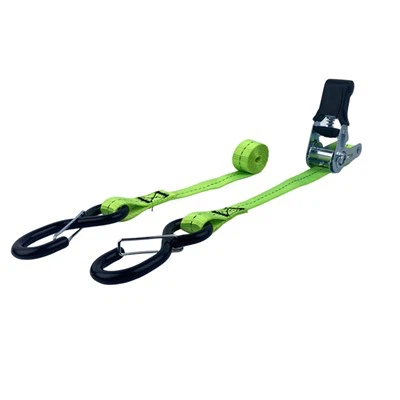
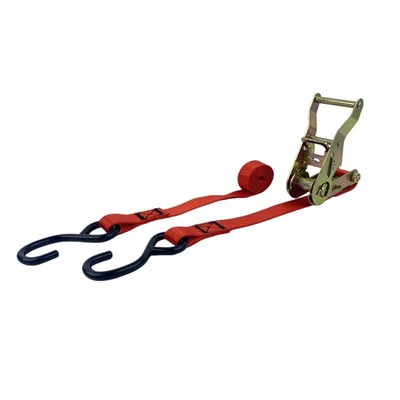
Our short tie - down straps with hooks are available in different widths and strengths. These straps are ideal for securing smaller automotive parts or equipment. They have a static load capacity that ranges from a few hundred pounds to over a thousand pounds, depending on the specific model. The hooks are designed to provide a secure attachment, and the straps are made of high - quality polyester for durability and strength.
Cargo Buckle Ratchet Straps
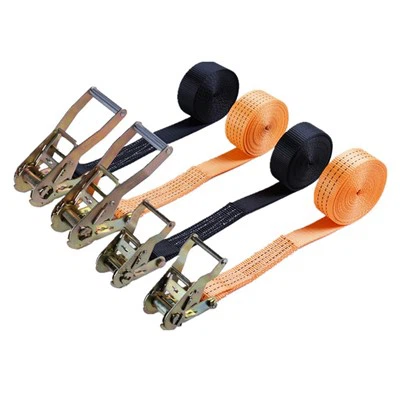
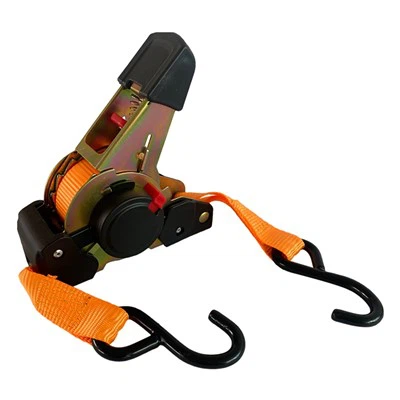
Cargo buckle ratchet straps are a popular choice for heavier loads. The ratchet mechanism allows for easy tightening and adjustment of the strap. Our cargo buckle ratchet straps have a higher static load capacity compared to some of our other products. They are available in various lengths and can support loads ranging from one ton to several tons. These straps are suitable for securing large automotive cargo, such as engines or transmissions.
5 Ton Straps
For extremely heavy loads, we offer 5 Ton Straps. These heavy - duty straps are designed to provide maximum strength and security. They are made of premium materials and have a static load capacity of 5 tons or more. These straps are often used in commercial automotive transportation for transporting large machinery or multiple vehicles at once.
How to Select the Right Strap Based on Static Load Capacity
When selecting an automotive tie - down strap, it is essential to consider the weight of the load. First, accurately determine the weight of the item or items you need to secure. Then, choose a strap with a static load capacity that is equal to or greater than the weight of the load. It is also a good idea to have some safety margin. For example, if your load weighs 2000 pounds, it may be wise to choose a strap with a static load capacity of 3000 pounds to account for any unexpected forces during transportation.
In addition to the weight of the load, consider the type of vehicle and the type of transportation. If the vehicle will be traveling on rough roads with a lot of bumps and vibrations, you may need a strap with a higher static load capacity to withstand the dynamic forces. Similarly, if the load is likely to shift during transportation, a stronger strap is recommended.
Conclusion
The static load capacity of automotive tie - down straps is a critical factor to consider when securing loads for transportation. It is determined by factors such as the material, width, thickness, and construction of the strap. Understanding this concept is essential for ensuring safety and complying with regulations. As a reliable automotive tie - down straps supplier, we offer a diverse range of products with different static load capacities to meet your specific needs. Whether you need a simple short strap or a heavy - duty 5 - ton strap, we have the right solution for you.
If you are interested in our products and would like to discuss your specific requirements for automotive tie - down straps, we invite you to contact us for a detailed consultation. Our team of experts is ready to assist you in selecting the most suitable straps based on the static load capacity and other factors.
References
- "Handbook of Transportation Engineering", various authors, published by a leading transportation engineering publisher
- Industry standards and guidelines for tie - down straps from relevant professional organizations in the automotive and transportation sectors.